Archive
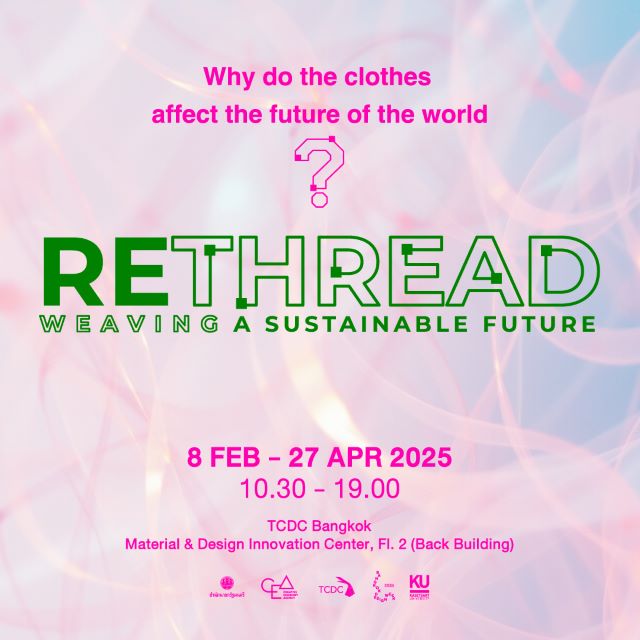
นิทรรศการ ‘ReThread: Weaving a Sustainable Future’!
Description
วันที่จัดแสดง : 8 กุมภาพันธ์ - 27 เมษายน 2568 สถานที่ : Material & Design Innovation Center (MDIC) ชั้น 2 อาคารส่วนหลัง TCDC กรุงเทพฯ Date : 8 February - 27 April 2025 Venue : Material & Design Innovation Center (MDIC), Fl.2, TCDC Bangkok
Subject
circular / materials / sustainable / design / economy / future / innovations / clothes / fashion / textiles / natural / fibers / recycles
Details
Released
8 February 2025
File Format
text/html
นิทรรศการ ‘ReThread: Weaving a Sustainable Future’!
วันที่จัดแสดง: 8 กุมภาพันธ์ - 27 เมษายน 2568
สถานที่: Material & Design Innovation Center (MDIC) ชั้น 2 อาคารส่วนหลัง TCDC กรุงเทพฯ
Date: 8 February - 27 April 2025
Venue: Material & Design Innovation Center (MDIC), Fl.2, TCDC Bangkok

นิทรรศการนี้เกิดจากงานวิจัยเพื่อศึกษาปัจจัยที่ขับเคลื่อนและอุปสรรคของ วัสดุหมุนเวียน (Circular Materials) ซึ่งครอบคลุมวัสดุหลากหลายประเภท แต่เราเลือก “สิ่งทอ” เป็นหัวใจหลัก เพราะเป็นวัสดุที่ทุกคนใช้ในชีวิตประจำวัน และยังเป็นวัสดุที่นำไปใช้ต่อยอดได้ในหลายอุตสาหกรรม ไม่จำกัดเฉพาะแฟชั่น
“ReThread: Weaving a Sustainable Future” จะพาคุณทำความเข้าใจ Circular Design หรือการออกแบบเพื่อความยั่งยืน ที่ช่วยให้เสื้อผ้าและสิ่งของรอบตัวไม่กลายเป็นขยะ แต่ถูกนำกลับมาใช้ใหม่ ทุกโซนของนิทรรศการนี้เชื่อมโยงกับชีวิตประจำวันของเรา และอาจเปลี่ยนมุมมองของคุณที่มีต่อแฟชั่นและการใช้ทรัพยากร!
นิทรรศการนี้เป็นส่วนหนึ่งของงานวิจัยโครงการศึกษาปัจจัยขับเคลื่อนและความท้าทายต่อเศรษฐกิจหมุนเวียนในห่วงโซ่อุปทานของอุตสาหกรรมสิ่งทอ โดยสำนักงานส่งเสริมเศรษฐกิจสร้างสรรค์ (องค์การมหาชน) ร่วมกับมหาวิทยาลัยเกษตรศาสตร์ โดยได้รับการสนับสนุนจากกองทุนส่งเสริมวิทยาศาสตร์ วิจัยและนวัตกรรม
This exhibition stems from research exploring the drivers and obstacles of circular materials in a circular supply chain. Textiles, however, are the core material chosen because they are a material everyone uses in their daily lives and can be applied to many industries, not just fashion.
"ReThread: Weaving a Sustainable Future" explores circular design, a sustainable approach that helps clothing and other items around us avoid becoming waste and instead reuse them. Every zone in this exhibition connects to our daily lives and may change your perspective on fashion and resource use!
This exhibition is part of a research project exploring the drivers and challenges of a circular economy in the textile industry supply chain, organized by the Creative Economy Agency (Public Organization) in collaboration with Kasetsart University, with support from the National Science, Technology, Research and Innovation Fund.
นิทรรศการ Rethread: Weaving a Sustainable Future


ภาพรวมของนิทรรศการ Rethread/Exhibition Overview
 ภาพรวมของนิทรรศการ Rethread/Exhibition Overview
ReThread: Weaving a Sustainable Future
ทำไมเสื้อผ้าในตู้ของเรา...ถึงมีผลกับอนาคตของโลก ?
นิทรรศการ ReThread จะพาคุณเดินทางผ่านเรื่องราวของเส้นใย วัสดุ และนวัตกรรม ที่จะทำให้อุตสาหกรรมสิ่งทอเปลี่ยนจาก "ทิ้งแล้วทิ้งเลย" สู่การหมุนเวียนใช้ใหม่ได้อย่างสร้างสรรค์
ReThread: Weaving a Sustainable Future
Why do the clothes in our wardrobe affect the future of the world ?
The ReThread exhibition takes you on a journey through the stories of fibers, materials, and innovations that are transforming the textile industry from a 'take-make-waste' model into one of creative and circular reuse.
โซนที่ 1 Introduction/ Zone 1 Introduction
 โซนที่ 1 Introduction/ Zone 1 Introduction
โซนที่ 1: Introduction จุดเริ่มต้นของ Circular Design เส้นทางนี้ จะนำเราไปสู่อนาคตที่ยั่งยืนได้ไหม?
Zone 1: Introduction
- เสื้อผ้าในตู้ของคุณเกี่ยวข้องกับอนาคตของโลกได้อย่างไร ?
ขยะสิ่งทอมหาศาล เป็นปัญหาที่สะสมและถูกมองข้าม การผลิตเสื้อผ้าไม่ได้ จบแค่ในโรงงาน แต่มันส่งผลกระทบถึงตัวเรา ซึ่งเราทุกคนสามารถเปลี่ยนมันได้
เสื้อผ้าที่เราใส่ในทุกวันนี้ อาจดูเหมือนไม่มีอะไรซับซ้อน แต่รู้ไหมว่า... มันซ่อน "เรื่องราว" ไว้มากมาย ตั้งแต่ต้นกำเนิดจนถึงจุดจบ
- Let's start by thinking about how the clothes in your closet relate to the future of the world.
The massive amount of textile waste is a growing problem that has long been overlooked. The production of clothing doesn't end in the factory—it extends its impact to all of us, shaped by our collective actions. However, we all have the power to change this.
The clothes we wear today may seem simple, but did you know they hold countless 'stories' hidden within—stories that trace their journey from origin to end ?

เส้นทางวิวัฒนาการของสิ่งทอและแฟชั่น (ย้อนมองอดีต - ยุคทอง Fast Fashion - ยุคที่เราตื่นรู้)
The Evolutionary Journey of Textiles and Fashion (The Past - Fast Fashion - Awakening)
ย้อนมองอดีต: ในอดีต เราใช้เส้นใยธรรมชาติอย่างฝ้ายและไหม ทอผ้าด้วยมือในชุมชน ทุกเส้นใยสะท้อนความสัมพันธ์ใกล้ชิดระหว่างมนุษย์กับธรรมชาติ แต่เมื่อเกิดการปฏิวัติอุตสาหกรรม เครื่องจักรเข้ามาเปลี่ยนทุกอย่าง การผลิตเร็วขึ้น ปริมาณเยอะขึ้น นำมาซึ่ง "Fast Fashion"
Looking Back at the Past: In the past, we relied on natural fibers like cotton and silk, weaving fabrics by hand within communities. Each fiber reflected the close relationship between humans and nature. However, the Industrial Revolution changed everything. Machines accelerated production and increased output, paving the way for what we now call "Fast Fashion."
ยุคทอง Fast Fashion:
- ทุกปี 92 ล้านตัน ของขยะสิ่งทอถูกสร้างขึ้น และส่วนใหญ่ลงเอยในหลุมฝังกลบ
- เสื้อยืด 1 ตัวใช้น้ำมากพอสำหรับการดื่มถึง 2 ปี!
- ขยะสิ่งทอที่เราทิ้งไว้กลายเป็นปัญหาที่ส่งผลถึงโลกและสิ่งแวดล้อม
The Golden Era of Fast Fashion:
- Every year, 92 million tons of textile waste are generated, with most ending up in landfills.
- A single T-shirt requires enough water to sustain 2 years of drinking.
- The textile waste we discard has become a pressing issue, impacting the planet and the environment.
ยุคที่เราตื่นรู้ถึงการบริโภคที่ไร้ขีดจำกัด:
- คนหันกลับมามองเรื่อง Circular Design และ Sustainability ที่ช่วยให้เสื้อผ้าของเราไม่ได้จบลงที่ "ขยะ"
- วัสดุรีไซเคิล ใยกล้วย หรือ เส้นใยชีวภาพ (Bio-based Materials) อาจเป็นคำตอบของอนาคตที่ดีกว่า
The Age of Awareness in Unlimited Consumption:
- People are turning their attention to Circular Design and Sustainability, ensuring that our clothes don’t end up as "waste."
- Recycled materials, banana fibers, or bio-based materials might hold the key to a better future.
โซนที่ 2 Environmental Hotspot/ Zone 2 Environmental Hotspots
 โซนที่ 2 Environmental Hotspot/ Zone 2 Environmental Hotspots
โซนที่ 2: Environmental Hotspots: Fast Fashion กับผลกระทบที่มองไม่เห็นในน้ำ บนดิน และในอากาศ ผ่านข้อมูลตัวเลขทางสถิติของมลภาวะในประเทศและต่างประเทศ
Zone 2: Environmental Hotspots
"ทุกการผลิต ทุกการเลือก... ส่งผลกระทบต่อโลกใบนี้มากกว่าที่คุณคิด"
- ผลกระทบต่อสิ่งแวดล้อมจากสิ่งทอและแฟชั่น
อากาศ
โลก
: อุตสาหกรรมสิ่งทอปล่อยก๊าซคาร์บอนไดออกไซด์ปีละ 1.700 พันล้านตันต่อปี คิดเป็น 10% ของการปล่อยก๊าซคาร์บอนทั่วโลก
ประเทศไทย
: 4-8% ของการปล่อยก๊าซคาร์บอนไดออกไซด์ทั้งประเทศมาจากอุตสาหกรรมสิ่งทอและเครื่องนุ่งห่ม
น้ำ
โลก
: อุตสาหกรรมสิ่งทอใช้น้ำถึง 215 ล้านล้านลิตรต่อปี และก่อให้เกิดมลพิษ เทียบเท่าสระว่ายน้ำโอลิมปิก 86 ล้านสระ
: 20% ของน้ำเสียจากภาคอุตสาหกรรมทั่วโลกมาจากอุตสาหกรรมแฟชั่น
ประเทศไทย
: ภาคอุตสาหกรรมสิ่งทอใช้น้ำปริมาณมหาศาล 145 ล้านลูกบาศก์เมตรต่อปี คิดเป็น 0.067% ของปริมาณการใช้น้ำในภาคอุตสาหกรรมสิ่งทอทั้งหมดบนโลก
: น้ำเสียกว่า 64 ล้านลูกบาศก์เมตรต่อปี ถูกปล่อยลงแหล่งน้ำธรรมชาติทุกปี!
ไมโครพลาสติก
โลก
: 171 ล้านล้านชิ้น ไมโครพลาสติกกำลังกองสะสมในมหาสมุทร และอาจเพิ่มขึ้นอีกหลายเท่าภายใน 20 ปีข้างหน้า
ประเทศไทย
: พบการปนเปื้อนไมโครพลาสติกในปลาทะเลที่ใช้เป็นอาหารในอ่าวไทยตอนบนร้อยละ 46.9 จากการสำรวจพบว่า ชาวไทยบริโภคไมโครพลาสติกมากที่สุดเป็นอันดับที่ 7 ของโลก
ดิน
โลก
: น้อยกว่า 1% ของวัสดุที่ใช้ในการผลิตเสื้อผ้าถูกนำมารีไซเคิลเป็นเสื้อผ้าใหม่
- การย่อยสลายของวัสดุสิ่งทอชนิดต่าง ๆ
ฝ้าย: 3 เดือน - 5 ปี
ขนสัตว์: 1-5 ปี
ลินิน: 2-6 สัปดาห์
ไหม: 1-4 ปี
พอลิเอสเตอร์: มากกว่า 200 ปี
ไนลอน: 30-40 ปี
"Every act of production, every choice... has a greater impact on the world than you might imagine."
- Environmental Hotspots in Textiles and Fashion
AIR
World
: 1.7 billion tons of carbon dioxide are emitted by the textile industry annually, representing 10% of global carbon emissions.
Thailand
: 4-8% of the country's total carbon dioxide emissions come from the textile and garment industry.
WATER
World
: 215 trillion liters of water are consumed and contaminated annually—equivalent to 86 million Olympic-sized swimming pools.
: 20% of global industrial wastewater pollution comes from the fashion industry.
Thailand
: 145 million cubic meters of water are consumed by the textile industry annually.
: 64 million cubic meters of wastewater are discharged into natural water sources annually.
Microplastic
World
: 171 trillion microplastic particles are currently accumulating in the world’s oceans, a number that could multiply several times over in the next two decades.
Thailand
:Microplastic contamination has been detected in 46.9% of marine fish used for food in the upper Gulf of Thailand.
Land
World
: Less than 1% of the materials used in clothing production are recycled into new garments.
- Timeline of Textile Material Decomposition
Cotton: 3 months to 5 years
Wool: 1 to 5 years
Linen: 2 to 6 weeks
Silk: 1 to 4 years
Polyester: Over 200 years
Nylon: 30 to 40 years
โซนที่ 3 Circular Design
/ Zone 3 Circular Design
 โซนที่ 3 Circular Design
/ Zone 3 Circular Design
โซนที่ 3 Circular Design
/ Zone 3 Circular Designโซนที่ 3: Circular Design นำเสนอแผนภูมิแนวทางในการแก้ปัญหาในการสร้าง Circular economy ของอุตสาหกรรมในสิ่งทอในประเทศ
Zone 3: Circular Design
Circular Textile Supply Chain
"สองเส้นทาง สองผลลัพธ์: คุณเลือกเส้นทางไหนให้โลก?"
- เส้นทางที่ 1: Linear Economy วัตถุดิบถูกนำมาใช้เพียงครั้งเดียวแล้วกลายเป็นขยะ
- เส้นทางที่ 2: Circular Economy ทุกวัตถุดิบและผลิตภัณฑ์ได้รับโอกาสครั้งที่สอง
ลองจินตนาการว่า เสื้อผ้าของคุณสามารถเดินทางกลับเข้าสู่วงจรการผลิตต่อได้ แทนที่จะทิ้งให้เป็นขยะ
Circular Textile Supply Chain
"Two Paths, Two Outcomes: Which Path Will You Choose for our World?"
- Path 1: Linear Economy – Raw materials are used once and then discarded as waste.
- Path 2: Circular Economy – All material and products are given a second chance.
Imagine if your clothes could re-enter the production cycle instead of ending up as waste.
โซนที่ 4 ปัจจัยขับเคลื่อน Circular Fashion/ Zone 4 Drivers and challenges toward circular fashion in Thailand
 โซนที่ 4 ปัจจัยขับเคลื่อน Circular Fashion/ Zone 4 Drivers and challenges toward circular fashion in Thailand
โซนที่ 4: ปัจจัยขับเคลื่อน Circular Fashion ของประเทศไทยในด้านต่าง ๆ พร้อมนำเสนอข้อมูลมาตรฐานสากลของสิ่งทอ
Zone 4: Drivers and challenges toward circular fashion in Thailand

4.1 คุณคิดว่าประเทศไทยมีศักยภาพที่จะก้าวสู่การเป็นศูนย์กลาง Circular Fashion ได้หรือไม่?
"เริ่มต้นวงจรใหม่ด้วยวัตถุดิบ"
- วัสดุทางการเกษตร: ประเทศไทยมีศักยภาพด้านวัตถุดิบธรรมชาติ เช่น ใยกัญชง ใยสับปะรด ใยกล้วย และใยผักตบชวา
- เส้นใยรีไซเคิลโพลีเอสเตอร์: ช่วยลดการปล่อยก๊าซเรือนกระจกและใช้พลังงานน้อยกว่าการผลิตพลาสติกใหม่ถึง 50%
- วัสดุเหลือใช้ก่อนและหลังการบริโภค: เปลี่ยนขยะให้กลายเป็นทรัพยากรใหม่ที่มีคุณค่า
"เปลี่ยนวิธีการผลิต"
- Zero Waste: ลดขยะให้เป็นศูนย์ ด้วยการออกแบบและกระบวนการผลิตที่ยั่งยืน
- Low-Water Dyeing: ย้อมสีที่ใช้น้ำน้อย ลดการใช้น้ำในอุตสาหกรรม
- Closed-Loop Systems: รีไซเคิลและอัพไซเคิลวัสดุ นำกลับเข้าสู่ระบบโดยไม่ก่อให้เกิดของเสีย
- Reduce Water Usage and Pollution: ลดการใช้น้ำและมลพิษ เพื่อผลกระทบต่อสิ่งแวดล้อมน้อยที่สุด
4.1 Do you think Thailand could become a leading hub for Circular Fashion?
"Starting a New Cycle with Materials"
- Agricultural Materials: Thailand excels in natural resources like hemp fiber, pineapple fiber, banana fiber, and water hyacinth fiber.
- Recycled Polyester: Reduces greenhouse gas emissions and uses 50% less energy compared to producing new plastic.
- Pre- and Post-Consumer Waste: Transforms waste into valuable resources for a sustainable future.
"Transforming Production Methods"
- Zero Waste: Eliminate waste through sustainable design and production processes.
- Low-Water Dyeing: Use less water in dyeing processes to reduce industrial water consumption.
- Closed-Loop Systems: Recycle and upcycle materials to keep them in continuous circulation without creating waste.
- Reduce Water Usage and Pollution: Minimize water consumption and environmental pollution for a lower impact.

4.2 ปัจจัยอะไรที่จะขับเคลื่อนให้ Circular Fashion ในไทยเติบโต?
“มาตรฐานเพื่อเศรษฐกิจหมุนเวียน”
มาตรฐานระดับสากลและระดับประเทศเป็นเครื่องมือสำคัญในการขับเคลื่อนอุตสาหกรรมสิ่งทอให้ยั่งยืน ด้วยการควบคุมคุณภาพ กระบวนการผลิต และการลดผลกระทบต่อสิ่งแวดล้อม เช่น การลดการปล่อยก๊าซเรือนกระจก การใช้ทรัพยากรอย่างคุ้มค่า และการส่งเสริมการรีไซเคิลและอัปไซเคิลวัสดุ ทั้งยังช่วยสร้างความเชื่อมั่นแก่ผู้บริโภคในการเลือกซื้อสินค้าที่ปลอดภัยและยั่งยืน พร้อมเพิ่มขีดความสามารถของไทยในตลาดโลกที่ให้ความสำคัญกับความยั่งยืนอย่างแท้จริง
1. Switzerland | OEKO-Tex Standard 100
2. Germany | Global Organic Textile Standard (GOTS)
3. Australia | Global Recycle Standard (GRS)
4. Thailand | Carbon Footprint of Product: CFP)
5. Thailand | Carbon Footprint of Circular Economy Product (CE-CFP)
6. Thailand | Circular Mark
“ศักยภาพ (+) และข้อจำกัด (-) ของห่วงโซ่อุปทานสิ่งทอในระบบเศรษฐกิจหมุนเวียน”
สรุปข้อมูลจากผู้มีส่วนได้ส่วนเสียในอุตสาหกรรมสิ่งทอ ออกมาเป็นปัจจัยขับเคลื่อนและข้อจำกัด ไล่ตั้งแต่วัตถุดิบไปจนถึง End of life ของสินค้า มี 6 ด้าน คือ ด้านวัตถุดิบ ด้านการผลิต ด้านการตลาด ด้านมาตรฐาน ด้านการบริโภค ด้านการสิ้นสุดของผลิตภัณฑ์
ที่มา: จากรายงานโครงการศึกษาปัจจัยขับเคลื่อนและความท้าทายต่อเศรษฐกิจหมุนเวียน ในห่วงโซ่อุปทานของอุตสาหกรรมสิ่งทอ, 2567
"บริโภคอย่างมีสติ"
ลองเปลี่ยนวิธีการใช้เสื้อผ้าแบบเดิม ๆ ด้วย 7R Principles
- Reduce: ลดการซื้อเสื้อผ้าใหม่ ซื้อเฉพาะที่จำเป็น
- Reuse: ใช้เสื้อผ้าซ้ำในหลากหลายโอกาส
- Recycle: ส่งเสื้อผ้าเก่าเข้าสู่ระบบรีไซเคิล
- Repair: ซ่อมเสื้อผ้าแทนการทิ้ง
- Refurbish: ปรับปรุงเสื้อผ้าเก่าให้กลายเป็นสไตล์ใหม่
- Repurpose: เปลี่ยนเสื้อผ้าเก่าให้กลายเป็นสิ่งของอื่น เช่น กระเป๋า
- Rent: เช่าเสื้อผ้าสำหรับโอกาสพิเศษ
"4 กลุ่มผู้บริโภคไทย กับ Circular Fashion โอกาสทางการตลาดที่ไม่ควรพลาด"
ผลการสอบถามกลุ่มผู้บริโภคไทยจำนวน 253 คน ที่มีแนวโน้มสนใจหรือเคยซื้อผลิตภัณฑ์สิ่งทอหมุนเวียน พบว่าสามารถแบ่งกลุ่มผู้บริโภคที่สนใจ Circular Fashion ออกเป็น 4 กลุ่มหลัก โดยแต่ละกลุ่มมีเอกลักษณ์และพฤติกรรมที่แตกต่างกัน
1. Young Green Group (26.1%)
เป็นใคร
: วัยรุ่นและคนเริ่มทำงาน ช่วงอายุ 18-30 ปี
ชอบอะไร
: สนใจแฟชั่นที่ดูดีและรักษ์โลก เช่น การแลกเปลี่ยนเสื้อผ้า (Clothes Swap) และแบรนด์รีไซเคิล
พฤติกรรม
: ซื้อสินค้าราคาไม่สูง เน้นดีไซน์ทันสมัย
: ใช้โซเชียลมีเดีย เช่น Instagram และ TikTok ในการค้นหาไอเดีย
โอกาสทางการตลาด
: สร้างแคมเปญสนุก ๆ ที่เชื่อมโยงกับสิ่งแวดล้อม เช่น เสื้อผ้าจากขยะรีไซเคิลที่มีดีไซน์เก๋
2. Premium Textile Group (22.1%)
เป็นใคร
: ผู้มีรายได้สูง (มากกว่า 50,000 บาท/เดือน)
ชอบอะไร
: คุณภาพต้องมาก่อน เลือกวัสดุธรรมชาติหรือวัสดุรีไซเคิลที่ดูพรีเมียม
พฤติกรรม
: ซื้อเสื้อผ้าน้อยครั้ง แต่มองหาของที่ใช้งานได้ยาวนาน
: เน้นความคุ้มค่าและความคงทน
โอกาสทางการตลาด
: นำเสนอผลิตภัณฑ์ที่มีความพรีเมียมและเล่าเรื่องกระบวนการผลิตที่ยั่งยืน
3. Brown Group (17%)
เป็นใคร
: คนที่ยังไม่ได้สนใจ Circular Fashion อย่างชัดเจน
ชอบอะไร
: ราคาเป็นปัจจัยหลัก
พฤติกรรม
: เลือกสินค้าราคาถูกมากกว่าความยั่งยืน
: ยังมองว่า Circular Fashion ยุ่งยากและเหมาะกับกลุ่มเฉพาะ
โอกาสทางการตลาด
: สร้างความรู้ความเข้าใจและแสดงให้เห็นถึงประโยชน์ของ Circular Fashion เช่น ความคุ้มค่าในระยะยาว
4. Circular Green Group (34.8%)
เป็นใคร
: ผู้บริโภคที่ใส่ใจสิ่งแวดล้อมสูง และเลือกสินค้าที่ส่งผลกระทบต่ำ
ชอบอะไร
: สินค้าที่มีฉลากรับรอง เช่น Eco-Label และแบรนด์ที่เล่าเรื่องช่วยโลกได้ดี
พฤติกรรม
: มองหานวัตกรรม เช่น การรีไซเคิลและการอัปไซเคิล
: ช้อปปิ้งอย่างระมัดระวัง และใส่ใจวัสดุที่ใช้
โอกาสทางการตลาด
: เชื่อมโยงแบรนด์กับแคมเปญเพื่อโลก
: สร้างคอมมูนิตี้ผู้บริโภคที่ใส่ใจสิ่งแวดล้อม
4.2 What factors will drive the growth of Circular Fashion in Thailand?
"Standard for a Circular Economy"
International and national standards play a vital role in driving sustainability in the textile industry. They ensure quality control, eco-friendly production processes, and reduced environmental impacts, such as lowering greenhouse gas emissions, optimizing resource use, and promoting recycling and upcycling. These standards build consumer confidence in safe, sustainable products while enhancing Thailand’s competitiveness in the global market focused on sustainability.
1. Switzerland | OEKO-Tex Standard 100
2. Germany | Global Organic Textile Standard (GOTS)
3. Australia | Global Recycle Standard (GRS)
4. Thailand | Carbon Footprint of Product: CFP)
5. Thailand | Carbon Footprint of Circular Economy Product (CE-CFP)
6. Thailand | Circular Mark
“Potential (+) and Limitations (-) of Textile Supply Chains in a Circular Economy”
Data from textile industry stakeholders was summarized to identify drivers and constraints, ranging from raw materials to end-of-life products. These factors cover six areas: raw materials, production, marketing, standards, consumption, and end-of-life.
Source: Report from the project on drivers and challenges of the circular economy in the textile industry supply chain, 2024.
"Conscious Consumption"
Transform the way you use clothes with the 7R Principles:
- Reduce: Buy fewer new clothes—only what you truly need.
- Reuse: Wear your clothes in multiple ways and occasions.
- Recycle: Send old clothes to be recycled into new materials.
- Repair: Fix clothes instead of throwing them away.
- Refurbish: Update old clothes into fresh, new styles.
- Repurpose: Turn old clothes into other items, like bags.
- Rent: Borrow clothes for special occasions.
"4 Key Consumer Groups in Thailand's Circular Fashion: Untapped Market Opportunities"
A survey of 253 Thai consumers with interest or experience in purchasing circular textile products reveals four distinct consumer groups, each with unique characteristics and behaviors.
1. Young Green Group (26.1%)
Who they are
: Young adults and working professionals, ages 18-30.
What they like
: Interested in fashion that's both stylish and eco-friendly, such as clothes swaps and recycled brands.
Behaviors
: Buys affordable items with a focus on trendy designs.
: Uses social media like Instagram and TikTok to find ideas.
Marketing opportunity
: Create fun campaigns that connect with the environment, such as stylish clothing made from
recycled waste.
2. Premium Textile Group (22.1%)
Who they are
: High-income earners (over 50,000 baht/month)
What they like
: Quality comes first, preferring premium natural or recycled materials
Behaviors
: Buy clothing infrequently but look for long-lasting items
: Focus on value and durability
Market opportunity
: Offer premium products and showcase sustainable manufacturing processes
3. Brown Group (17%)
Who they are
: People who are not yet clearly interested in Circular Fashion.
What they like
: Price is a key factor.
Behavior
: Prefers affordable products over sustainability.
: Still think Circular Fashion is complicated and suits a niche.
Market Opportunity
: Raise awareness and demonstrate the benefits of Circular Fashion, such as long-term value.
4. Circular Green Group (34.8%)
Who they are
: Highly environmentally conscious consumers who choose low-impact products.
What they like
: Products with certified labels like Eco-Labels and brands that tell positive stories about the environment.
Behaviors
: Seek innovations like recycling and upcycling.
: Shop carefully and consider the materials they use.
Marketing Opportunities
: Link brands with green campaigns.
: Build a community of environmentally conscious consumers.
Zone 5: สัมผัสนวัตกรรม Circular Materials จากทั้งไทยและต่างประเทศ ในกลุ่มวัสดุธรรมชาติ วัสดุสังเคราะห์ และกระบวนการหรือเทคโนโลยีการผลิต
Zone 5: Circular Materials
"ผลลัพธ์แห่งการหมุนเวียน...สู่การเปลี่ยนแปลงที่จับต้องได้" ลองสัมผัส วัสดุหมุนเวียน ที่เปลี่ยนจากสิ่งที่เคยเป็นขยะ... สู่ทรัพยากรใหม่ที่เต็มไปด้วยคุณค่า
"The outcomes of circularity... leading to tangible change."
Experience circular materials transformed from what was once waste... into valuable new resources.


"นวัตกรรมวัสดุ ต้นทางทรัพยากรหมุนเวียน สู่ความยั่งยืน"
Circular Materials คือวัสดุที่ถูกออกแบบมาให้สามารถหมุนเวียนกลับเข้าสู่ระบบการผลิตได้อย่างมีประสิทธิภาพ เพื่อลดการใช้ทรัพยากรใหม่ และช่วยสร้างผลกระทบเชิงบวกต่อสิ่งแวดล้อม วัสดุเหล่านี้ไม่ได้มีเป้าหมายเพียงแค่ลดปริมาณขยะ แต่ยังช่วยเพิ่มมูลค่าให้กับสิ่งที่เคยถูกมองข้าม เปลี่ยนให้กลายเป็นทรัพยากรใหม่ที่พร้อมใช้งาน
ในนิทรรศการนี้ เราได้แบ่งวัสดุออกเป็น 3 หมวดหมู่หลัก เพื่อช่วยให้คุณเข้าใจง่ายขึ้น
- Naturals: วัสดุจากธรรมชาติที่ใช้ทรัพยากรอย่างชาญฉลาด
- Polymers: วัสดุสังเคราะห์และรีไซเคิลที่ถูกออกแบบให้ยั่งยืน
- Process: เทคโนโลยีและกระบวนการที่สร้างสรรค์เพื่อเพิ่มคุณค่าให้กับวัสดุเดิม เช่น การย้อม การตกแต่งพื้นผิว หรือการปรับปรุงคุณสมบัติของวัสดุ ตอบสนองแนวคิดเรื่องการลดผลกระทบต่อสิ่งแวดล้อมและลดการใช้ทรัพยากร
ที่มา: ข้อมูลและตัวอย่างนวัตกรรมวัสดุหมุนเวียนในฐานข้อมูล Material ConneXion www.materialconnexion.com ซึ่งให้บริการแผ่นตัวอย่างวัสดุที่ศูนย์นวัตกรรมด้านวัสดุและการออกแบบ (Material & Design Innovation Center; MDIC) นี้ ไม่ว่าจะเป็น เส้นใยจากพืชธรรมชาติ ขวดพลาสติกรีไซเคิล หรือวัสดุที่เคยเป็นขยะมาก่อน
"Material Innovation: Circular Resources for Sustainability"
Circular materials are materials designed to be efficiently recycled into the manufacturing system, reducing the use of new resources and creating a positive impact on the environment. These materials not only aim to reduce waste but also add value to previously overlooked materials, transforming them into new, available resources.
- Naturals: Materials from nature that use resources intelligently
- Polymers: Synthetic and recycled materials designed for sustainability
- Processes: Innovative technologies and processes that add value to existing materials, such as dyeing, surface finishing, or improving material properties, addressing the concept of reducing environmental impact and resource consumption.
Source: Data and examples of innovative recycled materials in the Material ConneXion database www.materialconnexion.com which provides a material sample sheet at the Material & Design Innovation Center (MDIC), including natural plant fibers, recycled plastic bottles, and previously waste materials.
ถ้าคุณเลือกได้ คุณอยากให้เส้นใยในเสื้อผ้าชิ้นต่อไปของคุณมาจากอะไร?
If you could choose, what would you want the fibers in your next garment to be made from?

Zone 6: ผู้บริโภคยุคใหม่กับ Circular Fashion ที่ให้ความสำคัญกับแฟชั่นที่เป็นมิตรต่อสิ่งแวดล้อมมากขึ้น โดยเฉพาะ Gen Z แล้วตู้เสื้อผ้าของคุณช่วยโลกได้อย่างไร?
Zone 6: New Age Consumer and Circular Fashion
การขับเคลื่อนผ่านคนรุ่นใหม่
Circular Fashion ไม่ใช่แค่ "เทรนด์" แต่คือ "อนาคต" สำหรับคนรุ่นใหม่ มันคือวิถีชีวิตที่สะท้อนตัวตน และเป็นส่วนสำคัญของการร่วมรักษาสิ่งแวดล้อมอย่างยั่งยืน
กระแสแฟชั่นหมุนเวียนกำลังมาแรง โดยเฉพาะบนโซเชียลมีเดีย โดยในปี 2024 โพสต์เกี่ยวกับแฟชั่นมือสองและวินเทจเพิ่มขึ้นถึง 70%
50% ของ Gen Z เชื่อว่าแฟชั่นวินเทจสะท้อนถึงยุคสมัยที่ดีกว่า สอดคล้องกับกระแส "Nostalgia" หรือความคิดถึงอดีต
Gen Z ใช้โซเชียลมีเดียเป็นแหล่งข้อมูลสำคัญในการตัดสินใจซื้อสินค้า ติดตามรีวิวและเทรนด์จากเหล่าอินฟลูเอนเซอร์ ทำให้ Circular Fashion เข้าถึงง่ายและกลายเป็นส่วนหนึ่งของไลฟ์สไตล์
"Influencer ผู้รันวงการนี้"
Aditi Mayer: เป็นนักเล่าเรื่องและช่างภาพที่ใช้แฟชั่นเป็นสื่อในการพูดถึงงานฝีมือ วัฒนธรรม และปัญหาสิ่งแวดล้อม เธอเป็นนักเคลื่อนไหวด้านความยั่งยืนที่มุ่งเน้นประเด็นความเป็นธรรมทางสังคม โดยเฉพาะในชุมชนชายขอบ ผลงานของเธอเคยถูกนำเสนอในสื่อดังอย่าง Vogue และ The Guardian ซึ่งเธอเล่าถึงการปลดแอกแฟชั่นยั่งยืนจากระบบเดิม ๆ พร้อมตั้งคำถามต่อรูปแบบการบริโภคที่ไม่คำนึงถึงผลกระทบ หนึ่งในผลงานที่โดดเด่นของอาดิติ คือ "Portraits of the Village Economy" ซีรีส์ภาพถ่ายที่ถ่ายทอดชีวิตของผู้ปั่นด้าย ทอผ้า และเกษตรกรในแคว้นปัญจาบที่ช่วยรักษามรดกสิ่งทอท้องถิ่น เธอชี้ให้เห็นถึงความสำคัญของเศรษฐกิจชุมชนในฐานะรูปแบบความยั่งยืนที่เน้นการมีส่วนร่วม ไม่ใช่การบริโภคแบบมวลชน | Instagram (@aditimayer),aditimayer.com
Nia Thomas: เป็นดีไซเนอร์และอินฟลูเอนเซอร์จากสหรัฐอเมริกาที่ก่อตั้งแบรนด์แฟชั่นในปี 2018 แบรนด์ของเธอโดดเด่นด้วยการออกแบบที่ผสานความหรูหราเข้ากับความยั่งยืนและการให้คุณค่าต่อช่างฝีมือท้องถิ่น ผลงานของ Nia สร้างขึ้นจากวัสดุธรรมชาติ เช่น ขนแกะเมอริโนปราศจากมูลซิ่ง (Mulesing-free), ไหมที่ได้รับการรับรอง OEKO-TEX? และเส้นใยรีไซเคิล นอกจากนี้ เธอยังใช้เทคนิคย้อมสีจากธรรมชาติ เช่น สีจากเปลือกวอลนัทและดอกดาวเรือง เพื่อให้ทุกชิ้นงานเป็นมิตรต่อสิ่งแวดล้อมและอ่อนโยนต่อผิว แบรนด์ของเธอร่วมมือกับโรงงานที่นำโดยผู้หญิงในนิวยอร์ก เม็กซิโก และเปรู เพื่อผลิตงานที่สะท้อนถึงความเคารพต่อโลก ความยั่งยืน และการออกแบบที่ไร้กาลเวลา พร้อมเล่าเรื่องราวของความงดงามและจิตวิญญาณผ่านทุกชิ้นงาน | Instagram (@nia.thomas),niathomas.co
Jazmine Rogers: เป็นอินฟลูเอนเซอร์ด้านแฟชั่น Sustain ที่สร้างแรงบันดาลใจให้ผู้คนสนุกกับการแต่งตัวแบบรักษ์โลก เธอเริ่มต้นจากการแบ่งปันประสบการณ์ส่วนตัวเกี่ยวกับการเลือกใช้เสื้อผ้ามือสองและการซ่อมแซมเสื้อผ้าบนแพลตฟอร์มออนไลน์ โดยเน้นสร้างความสมดุลระหว่างความหวังและการลงมือทำ "Sustainable Baddie" โปรเจกต์ของเธอ กลายเป็นพื้นที่ที่รวมเนื้อหาเกี่ยวกับแฟชั่นและไลฟ์สไตล์ที่ยั่งยืน เน้นการใช้ชีวิตอย่างมีจุดมุ่งหมาย โดยผลงานของเธอมักแฝงด้วยความสนุกสนานและเป็นแรงบันดาลใจสำหรับผู้คนที่ต้องการเริ่มต้นสร้างการเปลี่ยนแปลงในแบบของตนเอง | Instagram (@thatcurlytop, @sustainablebaddie_), www.sustainablebaddie.com
"Gen Z: Key Drivers of Circular Fashion"
- Circular fashion is booming, especially on social media, with secondhand and vintage fashion posts increasing by 70% in 2024.
- 50% of Gen Z believes vintage fashion reflects a better era, aligning with the "Nostalgia" trend and a longing for the past.
- Gen Z relies on social media for purchase decisions, following influencer reviews and trends, making circular fashion more accessible and an integral part of their lifestyle.
"The Influencer Leading the Movement"
Aditi Mayer is a storyteller and photographer who uses fashion to explore craftsmanship, culture, and environmental issues. As a sustainability activist, she focuses on social justice, particularly in marginalized communities. Featured in Vogue and The Guardian, Aditi challenges conventional consumption and advocates for sustainable fashion reform. Her notable work, "Portraits of the Village Economy," is a photo series capturing the lives of spinners, weavers, and farmers in Punjab, preserving local textile heritage. She highlights the importance of community-based economies as a participatory, sustainable alternative to mass consumption.| Instagram (@aditimayer),aditimayer.com
Nia Thomas, a U.S.-based designer and influencer, founded her fashion brand in 2018, blending luxury with sustainability and honoring local artisans. Her designs use natural materials like mulesing-free merino wool, OEKO-TEX? certified silk, and recycled fibers. She incorporates natural dyes, such as walnut shells and marigold, for eco-friendly and skin-safe creations. Nia’s brand collaborates with women-led factories in New York, Mexico, and Peru, reflecting a commitment to sustainability, timeless design, and respect for the planet. Each piece tells a story of beauty, craftsmanship, and spirit.| Instagram (@nia.thomas),niathomas.co
Jazmine Rogers is a sustainable fashion influencer inspiring people to embrace eco-friendly style with joy. Starting by sharing her journey of thrift shopping and repairing clothes online, she emphasizes balancing hope with action. Her project, "Sustainable Baddie," is a space for sustainable fashion and lifestyle content, encouraging purposeful living. Jazmine’s work is playful yet empowering, inspiring others to start their own journeys toward meaningful change. | Instagram (@thatcurlytop, @sustainablebaddie_), www.sustainablebaddie.com


ตู้เสื้อผ้าของคุณช่วยโลกได้อย่างไร?
"ตู้เสื้อผ้าของคุณ...ช่วยปลดปัญหาให้โลกได้"
คำนวณผลกระทบจากการใช้เสื้อผ้าของคุณ กรอกข้อมูล เช่น จำนวนเสื้อผ้าที่ซื้อในปีที่ผ่านมา ความถี่ในการซักผ้า และวิธีจัดการกับเสื้อผ้าเก่า (รีไซเคิล บริจาค หรือทิ้ง)
Circular Wardrobe & Commitments
“Your wardrobe... can be the solution to the world's problems.”
Calculate the Impact of Your Clothing Choices Share details like how many clothes you bought last year, how often you do laundry, and what you do with old clothes (recycle, donate, or toss them).

แผนการผลักดัน Circular Economy ในระยะสั้น ระยะกลาง และระยะยาว
ร่วมแสดงความคิดเห็นเพื่อสร้างอนาคตที่ยั่งยืนให้กับอุตสาหกรรมสิ่งทอและแฟชั่นไทย เลือกโยงเส้นด้ายตามข้อแผนงานที่คุณคิดว่าสำคัญ ตามลำดับความเร่งด่วนที่คุณเห็นว่าเหมาะสม
รายงานวิจัยฉบับย่อ
ค้นพบข้อมูลเชิงลึกและแนวทางสำคัญในรายงาน
"สิ่งทอไทยบนเส้นทางของเศรษฐกิจหมุนเวียน (Thai Textile’s Circular Journey: Push and Pull Factors)”
Circular Economy promotion plan in the short, medium and long term
Share Your Thoughts to Build a Sustainable Future for Thailand's Textile and Fashion Industry. Choose and connect the threads to the plans you believe are important, based on the level of urgency you think is appropriate.
Research Summary
Discover key insights from the report in Thai.
"สิ่งทอไทยบนเส้นทางของเศรษฐกิจหมุนเวียน (Thai Textile’s Circular Journey: Push and Pull Factors)”
Related To This Item
สื่ออื่นๆ ที่เกี่ยวข้อง
You May Also Like
แนะนำสื่ออื่นๆ ที่น่าสนใจ
Your Recent Views
สื่ออื่นๆ ที่คุณเพิ่งดู