Archive
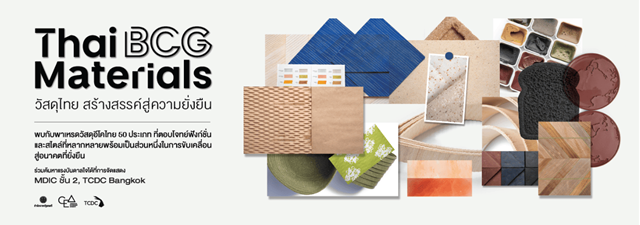
งานจัดแสดงนวัตกรรมวัสดุ “Thai BCG Materials วัสดุไทย สร้างสรรค์สู่ความยั่งยืน”
Description
วันที่จัดแสดง : 23 เมษายน - 25 สิงหาคม 2567 สถานที่ : Material & Design Innovation Center (MDIC) ชั้น 2 อาคารส่วนหลัง TCDC กรุงเทพฯ Date : 23 April - 25 August 2024 Venue : Material & Design Innovation Center (MDIC), Fl.2, TCDC Bangkok
Subject
materials / thailand / innovation / technology / recycled / renewable / sustainable / waste / development / green / economy / design / exhibtion / future
Details
Released
23 April 2024
File Format
text/html
งานจัดแสดงนวัตกรรมวัสดุ “Thai BCG Materials วัสดุไทย สร้างสรรค์สู่ความยั่งยืน”
วันที่จัดแสดง : 23 เมษายน - 25 สิงหาคม 2567
สถานที่ : Material & Design Innovation Center (MDIC) ชั้น 2 อาคารส่วนหลัง TCDC กรุงเทพฯ
Date : 23 April - 25 August 2024
Venue : Material & Design Innovation Center (MDIC), Fl.2, TCDC Bangkok
“Thai BCG Materials วัสดุไทย สร้างสรรค์สู่ความยั่งยืน”
ความท้าทายของสภาวการณ์โลกในปัจจุบันที่ผู้คนเริ่มปรับตัวและคำนึงถึงสิ่งแวดล้อมมากยิ่งขึ้น นับเป็นโอกาสของการเลือกใช้วัสดุสร้างสรรค์ไทยที่มีนวัตกรรม วัสดุที่เป็นมิตรต่อสิ่งแวดล้อม วัสดุรีไซเคิล และวัสดุหมุนเวียน เพื่อลดการใช้ทรัพยากรและปริมาณขยะที่อาจเกิดขึ้น พร้อมทั้งส่งเสริมการสร้างความยั่งยืนเพื่อให้สอดคล้องกับโมเดลเศรษฐกิจ BCG ของประเทศไทยในปัจจุบัน และเป้าหมายการพัฒนาที่ยั่งยืนขององค์การสหประชาชาติ (Sustainable Development Goals: SDGs)
“Thai BCG Materials”
The challenge of the current global situtation where people increasingly adapt and prioritize environmental concerns, it presents an opportunity to embrace innovative, eco-friendly, recycled, and renewable Thai materials. These materials aim to reduce resource consumption and minimize waste while promoting sustainability. This approach aligns with Thailand's current Bio-Circular-Green (BCG) Economic Model and the United Nations' Sustainable Development Goals (SDGs).
Link https://www.tcdc.or.th/th/all/events/1786


นิทรรศการ Thai BCG Materials วัสดุไทย สร้างสรรค์สู่ความยั่งยืน ณ Material & Design Innovation Center ชั้น 2 อาคารส่วนหลัง TCDC กรุงเทพฯ
วัสดุภายใต้คอนเซ็ปต์แห่งความยั่งยืน Bio / Circular / Green Economy (BCG) ถูกนำมาจัดแสดงในงาน “ Thai BCG Materials วัสดุไทย สร้างสรรค์สู่ความยั่งยืน ” โดยในงานจะได้พบกับวัสดุจัดแสดงจากผู้ประกอบการกว่า 50 บริษัท ที่รวมชิ้นงานจริงเกือบ 140 ชิ้นให้คุณได้ลองสัมผัส โดยประกอบไปด้วย 3 หมวดหมู่หลักดังนี้ Architect&Interior, Fashion&Lifestyle, Art&Packaging
การจัดแสดงนี้ได้หยิบความสร้างสรรค์ที่มีในการออกแบบวัสดุ ซึ่งเป็นพื้นฐานอย่างหนึ่งที่มากกว่าแค่การใช้งาน โดยเล่าผ่านที่มาของวัสดุ วัตถุดิบและการใช้งานซึ่งได้สะท้อนเรื่องราวทั้งกระบวนการทำ ความเปลี่ยนแปลง การทดลองใหม่ๆ รวมไปถึงอนาคตที่จะสามารถยั่งยืนได้มากขึ้น
“Thai BCG Materials” Showcase Venue: Material & Design Innovation Center, 2nd Floor, Back Building, TCDC Bangkok
Materials Under the Concept of Sustainability Bio / Circular / Green Economy (BCG) are displayed in the “Thai BCG Materials” showcase. Almost 140 samples from over 50 companies are exhibited into three main categories; Architect & Interior, Fashion & Lifestyle, Art & Packaging.
This exhibition highlights the creativity in material design, extending beyond mere functionality. It narrates the origins, raw materials, and applications of these materials, reflecting their development processes, transformative innovations, and experimental advancements, while emphasizing a sustainable future.
วัสดุก่อสร้างและตกแต่งภายใน
Architect&Interior
มีจำนวนทั้งสิ้น 27 ตัว ดังนี้
There are a total of 27 items as follows
1.Eterno wallpaper
วอลเปเปอร์ผ้าฟลีซสัญชาติญี่ปุ่น ผลิตจากเยื่อกระดาษธรรมชาติถึง 80% ที่ได้รับการรับรองจาก FSC ว่าเป็นผลิตภัณฑ์ที่เป็นมิตรกับสิ่งแวดล้อม ทนทาน ดูดซับความชื้น และช่วยระบายอากาศได้ดี เหมาะสำหรับงานปิดผิว และตกแต่งผนังห้อง อาคาร ที่ต้องการความเรียบง่าย สะอาดตา และเป็นมิตรต่อสิ่งแวดล้อม
1.Eterno wallpaper
Japanese fleece wallpaper is made from 80% natural pulp, which is certified by the FSC as an eco-friendly product. It is durable, moisture-absorbent, and promotes good air circulation. Used for surface finishing and decorative walls in rooms or buildings, it offers a simple, clean, and environmentally friendly aesthetic.

2. E-CO DANKWIAN POTTERY
แผ่นดินเผาจากเศษเครื่องปั้นดินเผาที่แตกหักจากกระบวนการผลิต ที่นำมาขึ้นรูปใหม่และนำไปเผาในอุณหภูมิที่ต่ำกว่าอุณหภูมิที่ใช้เผาเครื่องปั้นดินเผาทั่วไป (900 องศาเซลเซียส) เพื่อลดใช้พลังงานในการเผาไหม้ ในการปล่อยก๊าซคาร์บอนไดออกไซด์ สามารถใช้ในงานตกแต่งภายในได้ เช่น ผนังบ้านหรือห้องต่าง ๆ
2. E-CO DANKWIAN POTTERY
These tiles are made from broken pottery fragments collected during the production process, reshaped and fired at a lower temperature (900?C) than standard pottery. This method reduces energy consumption and carbon dioxide emissions. The tiles are suitable for interior decoration, such as walls in homes or rooms.

3. เซรามิกจากขยะเศษอาหาร
เซรามิกทำมือที่มีส่วนผสมจากเศษขยะอาหารที่เหลือทิ้ง เช่น เปลือกไข่ กากกาแฟ และแคร์รอต สำหรับใช้เป็นวัสดุทดแทนในการลดปริมาณดินและแร่ธาตุที่ใช้ในสารเคลือบ ปลอดภัยกับอาหาร และเข้าไมโครเวฟได้ สามารถขึ้นรูปเป็นภาชนะใส่อาหารและผลิตตามแบบได้ตามต้องการ โดยไม่จำกัดจำนวนชิ้น และไม่มีขั้นต่ำในการผลิต เช่น จาน ชาม ถ้วย ที่วางไข่
3. Ceramics From Food Scraps
Handmade ceramics incorporating food waste scraps, such as eggshells, coffee grounds, and carrots, are used as alternative materials to reduce the amount of clay and minerals needed for glazing. These ceramics are food-safe and microwave-safe, making them suitable for use as food containers . They can be molded into various shapes and produced in any quantity, with no minimum order required. Examples of products include plates, bowls, cups, and egg holders.

4. กระเบื้องและอิฐจากเศษเซรามิก
กระเบื้องและอิฐจากเศษเซรามิกของอุตสาหกรรมต่าง ๆ กว่า 80 – 90% ที่ผ่านการขึ้นรูปทางพันธะเคมี (Non-toxic Chemical) จึงไม่ต้องเผาที่ความร้อนสูง ทำให้ประหยัดพลังงานในการผลิต และหลีกเลี่ยงการปล่อยก๊าซคาร์บอนไดออกไซด์สู่อากาศ สามารถใช้เป็นวัสดุตกแต่งอาคาร วัสดุก่อสร้างได้ เมื่อไม่ต้องการใช้งานแล้วสามารถทุบทิ้งและนำเข้าสู่กระบวนการรีไซเคิลต่อได้
4. Tiles and Bricks Made from Ceramic Scraps
Tiles and bricks made from ceramic scraps in various industries, consisting of 80–90% are formed using chemical bonding (Non-toxic Chemicals), eliminating the need for high-temperature firing. This process saves energy during production and avoids the emission of carbon dioxide into the atmosphere. These materials can be used as decorative building materials and construction materials. When no longer needed, they can be demolished and recycled .

5. Talay วัสดุจากขยะขวดทางทะเล
วัสดุอัปไซเคิลโปร่งแสงจากขวดพลาสติกในท้องทะเลไทย ทำจากเศษขวดพลาสติกบดละเอียดผสมกับเรซินและฟิลเลอร์จากแร่แล้วนำมาขึ้นรูปในแม่พิมพ์เพื่อให้เกิดเป็นชิ้นงาน เพื่อใช้เป็นวัสดุปิดผิวได้ หรือขึ้นรูปเป็นผลิตภัณฑ์ตามต้องการ เช่น ถาดใส่ของ โคมไฟ
6. เอ็นไวโรบอร์ด
แผ่นบอร์ด EVB หรือ Enviro Board ผลิตจากกล่องเครื่องดื่มที่เหลือทิ้งจากอุตสาหกรรม (Post-Industrial) 100% โดยไม่แยกเยื่อ เป็นมิตรต่อสิ่งแวดล้อมเพราะปราศจากสารฟอร์มัลดิไฮด์ และสารเคมี ทนทานคล้ายไม้เนื้อแข็ง ทนความชื้นสูง เป็นฉนวนกันความร้อนได้ สามารถลดและซับเสียงได้ ไม่ขึ้นรา เหมาะใช้งานได้ในหลายอุตสาหกรรม เช่น วัสดุปิดผิวเฟอร์นิเจอร์ ฝ้า เพดาน ผนัง ฉากกั้นห้อง ปูพื้น หลังคา ชายคา หรือใช้เป็นไม้แบบหล่อปูนทดแทนไม้อัด
5. Talay
Translucent upcycled material made from plastic bottles found in the Thai oceans. It is created by finely grinding plastic bottle scraps, mixing them with resin and fillers derived from minerals, and then molding the mixture to form various products. This material can be used as a surface covering or molded into products as needed, such as trays or lamps.
6. Enviro Board
EVB (Enviro Board) boards are made from 100% post-industrial beverage carton waste without the separation of pulps . They are environmentally friendly as they are free from formaldehyde and chemicals. These boards are durable, similar to hardwood, and highly resistant to moisture. They serve as heat insulation, reduce and absorb sound, and are mold-resistant. EVB boards are suitable for use in various industries, such as surface materials for furniture, ceilings, walls, room dividers, flooring, roofing, eaves, or even as a concrete mold substitute for plywood.
(ซ้าย) วัสดุจากขยะขวดทางทะเล (ขวา) เอ็นไวโรบอร์ด (Left) Talay (Right) Enviro Board
 (ซ้าย) วัสดุจากขยะขวดทางทะเล (ขวา) เอ็นไวโรบอร์ด (Left) Talay (Right) Enviro Board
7. POLYAL
เม็ดพลาสติกจากพลาสติกประเภท PE ผสมกับอะลูมิเนียมที่เหลือจากการแยกเยื่อกระดาษจากกล่อง UHT สามารถนำไปขึ้นรูปเป็นชิ้นงานต่าง ๆ ได้เช่นเดียวกับพลาสติกทั่วไป ผิวของชิ้นงานมีความด้าน มีเกล็ดอะลูมิเนียมกระจายอยู่ทั่วทั้งชิ้นเป็นเอกลักษณ์ สามารถผสมสีในวัสดุได้ทั้งโทนเข้มและอ่อน และสกรีนลวดลายบนชิ้นงานได้ตามต้องการ
7. POLYAL
Plastic pellets made from PE plastic, mixed with aluminum scraps from the separation of paper pulps from UHT cartons, can be molded into various products, just like regular plastic. The surface of the finished products has a matte texture with scattered aluminum flakes throughout, giving it a unique appearance. The material can be colored in both dark and light tones, and designs can be screen-printed on the products as desired.

8. เม็ดพลาสติกจากอะลูมิเนียมฟอยล์ (rFoil)
เม็ดพลาสติกจากขยะพลาสติกประเภทซองบรรจุภัณฑ์ชนิดอ่อนที่ผสมอะลูมิเนียมฟอยล์ เช่น ซองขนม ซองน้ำยาทำความสะอาด และขยะพลาสติกยืดชนิดพอลิเอทิลีน หรือ PE มีคุณสมบัติยืดหยุ่นและเหนียว ทนทานต่อแรงดึง ความชื้น และสารเคมี วัสดุดัดงอได้ รับแรงกระแทกได้ดี
8. rFoil
Plastic pellets made from soft packaging plastic waste, such as snack bags, cleaning product sachets, and stretch polyethylene (PE) plastic waste, are mixed with aluminum foil. These pellets possess flexible and tough properties, making them resistant to tensile strength, moisture, and chemicals. The material is also bendable and has good impact resistance.

9. บริการขึ้นรูปชิ้นงานพลาสติก (Injection Molding)
บริการออกแบบผลิตภัณฑ์ ออกแบบวิศวกรรมพลาสติกสำหรับการผลิต ด้วยวิธีการฉีดพลาสติก (Injection molding plastic) จำนวนขั้นต่ำ 1 ชิ้น สามารถทดสอบการขึ้นรูปวัสดุใหม่ ๆ ได้ด้วยดีไซน์กว่า 400 แบบ
9. Injection Molding
Product design service, plastic engineering design for production using injection molding plastic, with minimum order 1 piece, able to test the new materials forming with over 400 designs.

10. Sugar Palm Wood Planks
แผ่นไม้ตาลจากต้นตาลตัวผู้ แถบทางใต้ของประเทศไทย ที่ไม่ได้ใช้ประโยชน์ทางการเกษตร ลักษณะเป็นไม้เนื้อแข็งสามารถใช้เป็นโครงสร้างได้ดี และมีลวดลายเนื้อไม้ที่เป็นเอกลักษณ์ ผ่านการแปรรูปและรักษาเนื้อไม้ด้วยน้ำยาสูตรเฉพาะของแบรนด์ ที่ช่วยกันเชื้อราและกันมอด
10. Sugar Palm Wood Planks
Palm wood planks are sourced from male palm trees in the southern part of Thailand that are not utilized. The wood is hardwood, making it suitable for structural use, and it features a unique wood grain pattern. The wood is processed and treated with a special brand formula that helps prevent mold and ward off termites.

11. ไม้อัดดัดโค้ง
แผ่นไม้อัดดัดโค้งผลิตจากไม้ซุงในประเทศไทย ด้วยเทคโนโลยีในการสลับเสี้ยนไม้ ทำให้แผ่นไม้อัดมีความยืดหยุ่นสูง สามารถม้วนกลมได้ถึง 360 องศาโดยไม่หัก สามารถใช้ในงานที่ต้องการความโค้ง เช่น เฟอร์นิเจอร์ วัสดุปิดผิว เครื่องดนตรี หรือฉากกั้นห้อง พร้อมคุณสมบัติกันน้ำ ปลอดกลิ่นสารเคมีด้วยค่าสารฟอร์มัลดีไฮด์ระดับต่ำมาตรฐานญี่ปุ่น
11. Bendable Plywood Sheets
Bendable plywood is made from logs sourced in Thailand, using technology that alternates the wood grain direction. This process gives the plywood high flexibility, allowing it to be rolled up to 360? without breaking. It can be used in applications that require curvature, such as furniture, surface materials, musical instruments, or room dividers. The plywood also features water-resistant properties and is free from chemical odors, with a low formaldehyde emission level meeting Japanese standards.

12. Greenlam Laminates
วัสดุปิดผิวงานเฟอร์นิเจอร์และตกแต่งภายในทดแทนการใช้ไม้ ที่ผลิตจากเยื่อกระดาษคุณภาพสูงผสมกับเรซิน ด้วยคุณสมบัติป้องกันไวรัส (Anti-Virus Grade) ทนรอยขีดข่วน สามารถออกแบบลวดลายกลายเป็นงานศิลปะบนฝาผนังได้ตามต้องการ
12. Greenlam Laminates
Surface materials for furniture and interior decoration, made from high-quality paper pulp mixed with resin, offer an alternative to wood. These materials have anti-virus properties (Anti-Virus Grade), are scratch-resistant, and can be designed with patterns, turning them into artistic wall designs as desired.

13. Formica Reclaimed Denim Fiber Laminate
ลามิเนตอัดแรงดันสูง (High Pressure Laminate) ที่มีส่วนผสมของเส้นใยยีนส์ที่ไม่ได้ใช้แล้วมาเป็นวัตถุดิบในการผลิต ผิวสัมผัสและสีสันเหมือนผ้ายีนส์ มีคุณสมบัติยับยั้งการเจริญเติบโตของแบคทีเรียและเชื้อรา ทนทานต่อรอยขีดข่วน และแรงกระแทก
13. Formica Reclaimed Denim Fiber Laminate
High Pressure Laminate (HPL) made with recycled denim fibers as a raw material which has a surface texture and color resembling denim fabric. It possesses antibacterial and antifungal properties, is highly resistant to scratches and impact.

14. Grog X Plastic
แผ่นคอมโพสิตจากเศษเครื่องปั้นดินเผาในชุมชนด่านเกวียน ที่เกิดจากการแตกหักเสียหายในระหว่างกระบวนการผลิต ผสมกับฝาขวดน้ำ ซึ่งเป็นขยะพลาสติกใช้แล้วทิ้ง ที่สร้างสรรค์ลวดลายและพื้นผิววัสดุในสัดส่วนที่แตกต่างกัน ทั้ง 40:60 หรือ 30:70 หรือสัดส่วนอื่น ๆ ตามที่ต้องการได้ สามารถใช้ในงานตกแต่งภายในทดแทนวัสดุอื่น ๆ เช่น แผ่นตกแต่งผนัง แท่นวางของ
14. Grog X Plastic
Composite sheets made from broken pottery waste during the production process in the Dan Kwian village. The wastes are combined with discarded plastic water bottle caps. These materials create unique patterns and textures in various ratios, such as 40:60, 30:70, or other custom proportions as desired. These composite sheets can be alternatively used as interior decorative materials, such as wall panels or pallets.

15. Redust แผ่นรีไซเคิลจากเศษเฟอร์นิเจอร์
แผ่นรีไซเคิลจากเศษวัสดุเหลือทิ้งในโรงงานเฟอร์นิเจอร์ เช่น ขี้เลื่อย ขอบพีวีซี และเศษแผ่นไม้ชิ้นเล็ก ที่นำมาอัดเป็นแผ่นวัสดุใหม่ด้วยเรซิน เหมาะสำหรับนำมาใช้ในงานเฟอร์นิเจอร์ สามารถใช้ทดแทนแผ่นไม้ในการทำท็อปโต๊ะ และประกอบกับงานแผ่นปาร์ติเกิลบอร์ดเป็นแผ่นขาเก้าอี้หรือส่วนต่าง ๆ ของเฟอร์นิเจอร์ได้
15. Redust
Recycled sheets made from leftover materials in furniture factories, such as sawdust, PVC edges, and small wood scraps, are compressed into new material sheets using resin. These sheets are ideal for use in furniture production and can replace wood sheets for making table tops. They can also be applied with particle board to create chair legs or other parts of furniture.

16. โกเล็ม
แผ่น MCM (Modified Clay Material) หรือวัสดุแผ่นดินเหนียวดัดแปลง มีส่วนผสมของแร่จากดินบดละเอียดและหินที่ถูกผลิตเป็นแผ่นบาง วัสดุเป็นมิตรต่อธรรมชาติ ไม่ปล่อยสารเคมี มีคุณลักษณะพิเศษ เช่น สามารถดักกลิ่นและระบายกลิ่นเพื่อให้ห้องมีสภาพอากาศที่ดีขึ้น ช่วยลดอุณหภูมิภายในห้องในสภาพอากาศร้อน
16. Golem
MCM (Modified Clay Material) sheets are made from a blend of finely ground clay minerals and stone, produced into thin sheets. This material is eco-friendly and does not release chemicals. It has special properties, such as the ability to trap and neutralize odors, improving indoor air quality. Additionally, it helps lower the temperature within a room in hot weather conditions.

17. โมโครสโตน
แผ่นวีเนียร์หินที่บางเฉียบเพียง 1.0 มิลลิเมตร นวัตกรรมจากประเทศเยอรมนี ที่สกัดจากหินธรรมชาติ 100% ด้วยเทคโนโลยีการลอกหินขั้นสูงและเสริมความแข็งแรงด้วยใยผ้าคอตตอนด้านหลังแผ่นหิน ลักษณะคล้ายหนังและกระดาษ มีความยืดหยุ่นสูงสามารถดัดโค้งได้ไม่จำกัด และพับรัดเข้ามุมได้
17. Microstone
Thin veneer stone sheets, only 1.0 millimeter thick, are an innovation from Germany. They are extracted from 100% natural stone using advanced stone peeling technology and reinforced with cotton fabric fibers on the back of the stone sheet. The material resembles leather and paper, offering high flexibility that allows for unlimited bending and folding into corners.

18. วัสดุทดแทนไม้จากเส้นใยธรรมชาติ
วัสดุทดแทนไม้ผลิตจากเส้นใยที่ได้จากของเหลือทางการเกษตรที่หาได้ในประเทศ เช่น ใบสับปะรด ฟางข้าว เปลือกข้าวโพด ใยกัญชง ใยนุ่น โดยมีส่วนผสมของวัสดุธรรมชาติสูงถึง 85 – 90% มีความแข็งแรง ทนทาน มีสารเคลือบกันน้ำ แต่ไม่ควรแช่น้ำ และใช้งานภายนอก สั่งผลิตโดยเลือกส่วนผสมที่ต้องการเองได้มากกว่า 1 วัสดุ เพื่อให้ได้สัมผัสและคุณสมบัติที่ต้องการ
18. Wood Alternative Material from Natural Fibers
This wood alternative material is produced from fibers derived from agricultural waste available in the country, such as pineapple leaves, rice straw, corn husks, hemp fibers, and kapok fibers. It contains up to 85-90% natural materials, making it strong and durable. The material has a water-resistant coating, although it should not be submerged in water or used outdoors. It can be custom-ordered with a combination of desired materials to achieve the desired texture and properties.

19. เส้นใยกล้วยอัด
เส้นใยกล้วยอัดจากต้นกล้วยเหลือทิ้งในฟาร์มท้องถิ่น ผ่านกระบวนการบ่มเพื่อให้คลอโรฟิลล์หมด และนำเส้นใยมาอัดขึ้นรูป มีความแข็งแรงสูง น้ำหนักเบา ไม่สามารถกันน้ำได้ 100% แต่สามารถเคลือบกันน้ำแบบ Water Repellent ได้ พร้อมเคลือบสารกันรังสียูวีในตัว เคลือบสีธรรมชาติได้ตามต้องการ เช่น คราม น้ำตาล
19. Compressed Banana Fiber
Compressed banana fibers are sourced from leftover banana plants in local farms. The fibers undergo a fermentation process to remove chlorophyll before being compressed into shape. This material is highly durable and lightweight. While it is not 100% waterproof, it can be treated with a water-repellent coating. Additionally, it comes with built-in UV protection and can be coated with natural colors, such as indigo or brown.

20. ซิลค์ พลาสเตอร์
วัสดุวอลเปเปอร์แบบเหลว (Liquid Wallpaper) สำหรับงานตกแต่งภายใน ผลิตจากเส้นใยธรรมชาติ เช่น เส้นใยฝ้าย เส้นใยไหม เส้นใยไผ่ และเปลือกไม้ ที่ให้ความยืดหยุ่น ไร้กลิ่นฉุน และสารเคมี สามารถติดบนวัสดุได้หลากหลายทั้งผิวเรียบและขรุขระ เช่น ผนังปูน สมาร์ตบอร์ด ไม้ พลาสวูด โลหะ กระจก
20. Silk Plaster
Liquid wallpaper for interior decoration is made from natural fibers such as cotton, silk, bamboo fibers, and bark. It offers flexibility, is odorless, and contains no harmful chemicals. This wallpaper can be applied to various surfaces, both smooth and rough, including plastered walls, smart boards, wood, plaswood, metal, and glass.

21. SALTSTONE
แผ่นหินเกลือจากที่ราบสูงโปโทฮาร์ทางตอนใต้ของเทือกเขาหิมาลัย อุดมไปด้วยแร่ธาตุหลายชนิด เหมาะสำหรับนำไปใช้กรุผนังเพื่อเพิ่มความสวยงามภายในอาคาร สามารถนำไปใช้ในการก่อสร้างห้องเกลือและผนังเกลือของห้องซาวน่า ห้องทำสมาธิ ห้องฝึกโยคะ และห้องพักผ่อน
21. SALTSTONE
Salt stone sheets from the Pothohar Plateau, located in the southern part of the Himalayas, are rich in various minerals. These sheets are perfect for wall cladding, enhancing the interior aesthetics of buildings. They can also be used in the construction of salt rooms, sauna walls, meditation rooms, yoga studios, and relaxation spaces.

22. Green Rock
วัสดุเม็ดเซรามิกมวลเบาสังเคราะห์ที่เป็นผลผลิตจากกระบวนการเผาวัตถุดิบที่ได้จากของเหลือทิ้งจากอุตสาหกรรม นำมาขึ้นรูปในอุณหภูมิสูง มีรูพรุน น้ำหนักเบา แข็งแรง และดูดซึมความชื้นได้ดี สามารถเป็นฉนวนกันเสียง ฉนวนกันร้อน และกักเก็บความเย็นได้ สามารถนำมาใช้ทดแทนหินในงานคอนกรีต เช่น ผนังคอนกรีตพรีคาสต์ (precast) บล็อคก่อผนัง (Green Block) หรือในงานหินเทียมและวัสดุตกแต่งภายนอก (facade)
22. Green Rock
Lightweight synthetic ceramic beads are a byproduct of the heating process from various industries. These beads are formed at high temperatures, resulting in a porous, lightweight, and strong material with excellent moisture absorption properties. They can act as sound insulation, thermal insulation, and cold retention materials. This versatile material can replace stone in concrete applications, such as precast concrete walls, green blocks, or in artificial stone and exterior facade materials.

23. อิฐมวลเบาจากแกนกัญชง
อิฐมวลเบาที่มีแกนต้นกัญชงเป็นส่วนประกอบ ผลิตโดยการบดแกนกัญชงให้มีขนาดที่แตกต่างกัน พร้อมนำมาผสมกับปูนปลาสเตอร์ในสัดส่วนที่ไม่เกิน 30% ของส่วนผสมทั้งหมด และขึ้นรูปตามแม่พิมพ์พร้อมใช้งาน เพื่อลดการใช้วัสดุอื่น ๆ โดยใช้แกนกัญชงเหลือทิ้งมาทดแทนในส่วนประกอบ สามารถใช้ทดแทนวัสดุก่อสร้างอื่น ๆ
23. Hemp Lightweight Concrete
Hemp lightweight concrete is made by grinding the hemp stalks into different sizes and mixing them with plaster in proportions of up to 30% of the total mixture. The mixture is then molded. This material helps reduce the other components on the construction materials by utilizing leftover hemp stalks as a key component that can replace other building materials.

24. วัสดุทดแทนไม้จากของเหลือใช้ทางการเกษตร
วัสดุทดแทนไม้จากของเหลือทางการเกษตรแบบไม่มีเส้นใยที่หาได้ในประเทศ เช่น กากกาแฟ กากรำข้าว ที่มีส่วนผสมจากวัสดุธรรมชาติ และมีสารเคลือบกันน้ำ แต่ไม่ควรแช่น้ำ และใช้งานภายนอก สั่งผลิตโดยเลือกส่วนผสมที่ต้องการเองได้มากกว่า 1 วัสดุ และสามารถผสมกับวัสดุประเภทมีเส้นใยได้ เช่น ใบสับปะรด ใยกัญชง เพื่อให้ได้สัมผัสและคุณสมบัติที่ต้องการ
24. Agricultural Waste-Based Wood Substitutes
These wood substitutes are made from agricultural waste materials without fibers, such as coffee grounds and rice bran, which are sourced locally. They consist mainly of natural materials and come with a water-resistant coating. However, they should not be submerged in water or used outdoors. These materials can be customized by selecting multiple ingredients. Additionally, they can be mixed with fibrous materials, such as pineapple leaves and hemp fibers, to achieve specific textures and properties.
25. ไม้อัดบล็อกจากแกนกัญชง
ไม้อัดบล็อกจากแกนต้นกัญชง วัสดุเหลือใช้จากธรรมชาติที่มักถูกกำจัดทิ้ง ผลิตขึ้นจากการบดแกนต้นกัญชงในขนาดที่ต่างกัน พร้อมอัดขึ้นรูปเป็น รูปทรงต่าง ๆ สามารถเติมสีสันตามธรรมชาติ ตัดแต่งตามขนาดที่ต้องการได้ เหมาะกับใช้ในงานตกแต่งภายใน เฟอร์นิเจอร์ รวมถึงใช้ในเชิงก่อสร้างเพื่อทดแทนไม้อัดจากไม้ประเภทอื่นได้
25. Hemp Hurd Board
This board is made from hemp stalks, a natural byproduct often discarded as waste. The hemp stalks are ground into varying sizes and pressed into different shapes. The material can be naturally colored and tailored to specific sizes, making it versatile for use in interior decoration, furniture design, and even construction as a substitute for traditional plywood. Its environmentally friendly nature and durability make it an excellent option for sustainable design projects.
26. ยางพาราเคลือบป่าน
แผ่นยางพาราธรรมชาติ 100% ไม่ผสมยางสังเคราะห์ ผ่านกระบวนการผลิตแบบดั้งเดิมที่เรียกว่า Dunlop Process โดยใช้ระบบไอน้ำ เคลือบกับผ้าป่านด้วยกาวยางธรรมชาติ มีความยืดหยุ่น ป้องกันเสียง และลดแรงกระแทกได้ดี สามารถนำมาใช้งานได้หลากหลาย ทั้งเฟอร์นิเจอร์ เช่น พรมหรือเบาะรองนั่ง สินค้าไลฟ์สไตล์
26. Natural Rubber-Coated Flax
This material combines 100% natural rubber with hemp fabric through the traditional Dunlop process, using steam to bond the materials. The rubber coating provides excellent flexibility, sound insulation, and shock absorption properties. It can be used in various applications, including furniture such as rugs or cushions, as well as lifestyle products.
(บนหมายเลข 6) วัสดุทดแทนไม้จากของเหลือใช้ทางการเกษตร
(กลางหมายเลข 7) ไม้อัดบล็อกจากแกนกัญชง
(ล่างหมายเลข 8) ยางพาราเคลือบป่าน (Top, No. 6) Agricultural Waste-based Wood Substitute Material
(Middle, No. 7) Hemp Hurd Board
(Bottom, No. 8) Natural Rubber-Coated Flax
 (บนหมายเลข 6) วัสดุทดแทนไม้จากของเหลือใช้ทางการเกษตร
(กลางหมายเลข 7) ไม้อัดบล็อกจากแกนกัญชง
(ล่างหมายเลข 8) ยางพาราเคลือบป่าน (Top, No. 6) Agricultural Waste-based Wood Substitute Material
(Middle, No. 7) Hemp Hurd Board
(Bottom, No. 8) Natural Rubber-Coated Flax
(บนหมายเลข 6) วัสดุทดแทนไม้จากของเหลือใช้ทางการเกษตร
(กลางหมายเลข 7) ไม้อัดบล็อกจากแกนกัญชง
(ล่างหมายเลข 8) ยางพาราเคลือบป่าน (Top, No. 6) Agricultural Waste-based Wood Substitute Material
(Middle, No. 7) Hemp Hurd Board
(Bottom, No. 8) Natural Rubber-Coated Flax
27. Authentic Rubber Glue
กาวยางพาราที่มีส่วนผสมหลักจากน้ำยางพาราธรรมชาติ ไม่มีส่วนผสมของกาว EVA สามารถใช้ยึดติดกับวัสดุที่มีรูพรุน เช่น ผ้า กระดาษ หนัง หรือแม้แต่ติดยางพารากับยางพารา โดยไม่ก่อให้เกิดมลภาวะต่อสิ่งแวดล้อม สามารถเลือกสีสันของกาวได้ตามต้องการ ใช้งานได้หลากหลายอุตสาหกรรม เช่น อุตสาหกรรมเฟอร์นิเจอร์ รองเท้า หนัง กระดาษ แต่ไม่สามารถใช้ติดกับวัสดุที่ไม่มีรูพรุนได้ เช่น พลาสติกแข็ง
27. Authentic Rubber Glue
This natural rubber glue is primarily made from natural latex, with no EVA adhesive components. It is suitable for bonding porous materials such as fabric, paper, leather, or even for bonding rubber to rubber, without causing environmental pollution. The adhesive offers customizable color options and can be used in various industries, including furniture, footwear, leather, and paper. However, it is not suitable for bonding non-porous materials, such as rigid plastics.

วัสดุแฟชั่นและไลฟ์สไตล์
Fashion&Lifestyle
มีจำนวนทั้งสิ้น 11 ตัว ดังนี้
There are a total of 11 items as follows
1. ผ้าฝ้ายทอมือย้อมสีมะเกลือ
ผ้าฝ้ายทอมือย้อมสีดำธรรมชาติ 100% ที่แก้ปัญหาการย้อมผ้าสีดำที่ได้จากยางของผลมะเกลือ ซึ่งเป็นไม้หายากราคาแพง และมีจำนวนใช้ที่จำกัดในปัจจุบัน ทอโดยชุมชนบ้านกกบก ตำบลหนองงิ้ว อำเภอวังสะพุง จังหวัดเลย ใช้เทคนิคพิเศษโดยการย้อมสีธรรมชาติอื่นที่ให้สีเข้มก่อน ทำให้ไม่จำเป็นต้องย้อมด้วยมะเกลือถึงหลายสิบครั้ง จนได้สีดำสนิท
1. SUPER ECO BLACK
This 100% handwoven cotton is dyed with natural black dye derived from the resin of Ebony fruit, which is a rare and expensive material, and now has limited availability. The cotton is woven by the community of Ban Kok Bok Village, Nong Ngio Subdistrict, Wang Saphung District, Loei Province. A special technique is used where the fabric is initially dyed with other natural colors to achieve a dark shade, reducing the need for repeated dyeing with Ebony to achieve a deep black color.
2. ผ้าบาติกมารียองสยาม
ผ้าปลายไม้ที่เหลือจากระบบอุตสาหกรรมสิ่งทอ ทำลวดลายเทียนบาติกจากเทียนที่เหลือจากวัด ด้วยเทคนิค 3 แบบ คือ เขียนเทียนด้วยมือลาย Pansy พิมพ์เทียนบล็อกไม้ ลาย Anemone และเทคนิคลวดลายแตกลาย Crack วัสดุแต่ละชิ้นจะมีความคล้ายกันแต่ไม่เหมือนกัน 100% วัสดุมีความคงทนของสี สีไม่ตก
2. Marionsiam Batik Fabric
This fabric is made from leftover wooden end cloth from the textile industry, featuring batik patterns created using leftover wax from temples. By using 3 techniques, hand-drawn wax with the Pansy pattern, block-printed wax with the Anemone pattern, and a crackle pattern technique. Each piece of material is similar but not identical. The fabric has highly colorfastness, and the color fading.
3. ผ้าย้อมสีกากมะพร้าว
ผ้าคอตตอน 100% ที่เหลือจากระบบอุตสาหกรรมสิ่งทอย้อมสีธรรมชาติจากกากมะพร้าวเหลือทิ้งที่หาได้จากร้านกาแฟใกล้บ้าน สามารถสั่งผลิตเป็นกระเป๋า เสื้อผ้า ถุงผ้า หน้ากาก หรือใช้เป็นผ้าตกแต่งบ้านได้
3. Coconut Husk Dyed Fabric
This 100% cotton fabric is made from leftover materials from the textile industry and dyed with natural color from discarded coconut husks, which are sourced from local coffee shops. It can be custom-made into bags, clothing, fabric pouches, face masks, or used as home decor fabric.
4. ผ้าใบตองแห้ง
แผ่นใบตองแห้งผสานกับผ้าเส้นใยธรรมชาติ อัดแผ่นโดยไม่เคลือบผิววัสดุ โดยใช้นวัตกรรมธรรมชาติจากยางกล้วย ผสมผสานใบตองกว่า 7 สายพันธุ์ในพื้นที่จังหวัดอุตรดิตถ์ สร้างลวดลายไม่ซ้ำในแต่ละแบบและไม่จำกัดขนาด แต่หากใช้ใบแห้งสายพันธุ์เดียวทั้งใบจะถูกกำจัดขนาดอยู่ที่ประมาณ A3 สีสันใบตองจะมีสีที่แตกต่างกันไปตามธรรมชาติ
4. Dried Banana Leaf Fabric
This fabric is made from dried banana leaves combined with natural fiber fabric, pressed into sheets without coating the surface. It utilizes a natural innovation from banana sap and incorporates leaves from over seven different banana breeds found in Uttaradit Province. Each piece features unique patterns, and the size is not limited. However, if only one breed of dried leaves is used, the size is typically limited to approximately A3. The colors of the banana leaves vary naturally.
(ซ้ายไปขวา) ผ้าฝ้ายทอมือย้อมสีมะเกลือ, ผ้าบาติกมารียองสยาม, ผ้าย้อมสีกากมะพร้าว, ผ้าใบตองแห้ง (From left to right) SUPER ECO BLACK , Marionsiam Batik Fabric,
Coconut Husk Dyed Fabric, Dried Banana Leaf Fabric.
 (ซ้ายไปขวา) ผ้าฝ้ายทอมือย้อมสีมะเกลือ, ผ้าบาติกมารียองสยาม, ผ้าย้อมสีกากมะพร้าว, ผ้าใบตองแห้ง (From left to right) SUPER ECO BLACK , Marionsiam Batik Fabric,
Coconut Husk Dyed Fabric, Dried Banana Leaf Fabric.
(ซ้ายไปขวา) ผ้าฝ้ายทอมือย้อมสีมะเกลือ, ผ้าบาติกมารียองสยาม, ผ้าย้อมสีกากมะพร้าว, ผ้าใบตองแห้ง (From left to right) SUPER ECO BLACK , Marionsiam Batik Fabric,
Coconut Husk Dyed Fabric, Dried Banana Leaf Fabric.5. ผ้ารีไซเคิล
ผ้าแคนวาสเส้นใยรีไซเคิล 100% จากขวดน้ำพลาสติกที่ใช้แล้ว โดยกระบวนการเริ่มจากบดขวดพลาสติกจนกลายเป็นเศษพลาสติกชิ้นเล็ก ๆ ก่อนจะผ่านความร้อนจนหลอมเหลว และฉีดออกมาเป็นเส้นใย เพื่อนำมาทอเป็นผ้า สามารถปรับสัดส่วนของเส้นใยรีไซเคิลเพื่อนำมาผสมกับเส้นใยอื่น ๆ ได้ตามต้องการ
5. Recycled Fabric
This fabric is made from recycled plastic water bottles. The process begins by grinding the plastic bottles into small plastic pieces, which are then heated until they melt and are extruded into fibers. These fibers are woven into fabric. The proportion of recycled fibers can be adjusted and blended with other fibers as needed.
6. ผ้าใยกัญชง
ผ้าทอจากเส้นใยกัญชงที่ผลิตได้ในประเทศไทย เหนียวทนทาน เมื่อเทียบกับเส้นใยธรรมชาติชนิดอื่น ๆ ไม่อับชื้น ปราศจากเชื้อราและแบคทีเรีย ป้องกันรังสียูวีโดยธรรมชาติ ไม่มีส่วนผสมของสารเคมี ดูแลรักษาง่าย ช่วยลดอุณหภูมิทำให้ผู้ใส่รู้สึกไม่ร้อน พร้อมทั้งระบายอากาศได้ดี เพื่อให้ผ้ายังคงความนุ่มสำหรับตัดเย็บเสื้อผ้าใส่
6. Hemp Fiber Fabric
This fabric is woven from hemp fibers produced in Thailand. It is strong and durable compared to other natural fibers, resistant to moisture mold and bacteria. It naturally provides UV protection, contains no chemicals, and is easy to maintain. The fabric helps regulate temperature, keeping the wearer cool, and it offers excellent breathability, ensuring the fabric remains soft, making it ideal for clothing.
(ซ้าย) 5. ผ้ารีไซเคิล
(ขวา) 6. ผ้าใยกัญชง (Left) Recycled Fabric (Right) Hemp Fiber Fabric
 (ซ้าย) 5. ผ้ารีไซเคิล
(ขวา) 6. ผ้าใยกัญชง (Left) Recycled Fabric (Right) Hemp Fiber Fabric
(ซ้าย) 5. ผ้ารีไซเคิล
(ขวา) 6. ผ้าใยกัญชง (Left) Recycled Fabric (Right) Hemp Fiber Fabric7. แผ่นยางเคลือบผ้ากระสอบ
แผ่นผ้าเก่าเคลือบน้ำยางธรรมชาติด้วยการเคลือบมือ งานอัปไซเคิลของเก่าให้กลับมามีมูลค่าสไตล์งานศิลปะ (Art & Craft) แต่ละชิ้นมีสีสันเอกลักษณ์เฉพาะตัว สามารถเลือกผิวสัมผัสที่ต้องการได้ถึง 3 แบบตามวัสดุที่นำมาเคลือบ คือ ผ้ากระสอบ ผ้าแคนวาส และกระดาษรีไซเคิล มีคุณสมบัติกันน้ำ ทนฉีกขาด เช็ดทำความสะอาดง่าย และปราศจากมลภาวะจากขั้นตอนการผลิต
7. SAXTEX Upcycling Rubber Sheets
These are old fabric sheets coated with natural rubber through a manual coating process. This upcycling technique transforms old materials into valuable art & craft pieces, to create its own unique color. There are three texture options available, depending on the material being coated: sack cloth, canvas, and recycled paper. The final product is waterproof, tear-resistant, easy to clean, and free from pollution during the production process.

8. หนังชีวภาพ
แผ่นหนังชีวภาพ ผลิตจากเซลลูโลสที่ได้จากข้าวเล็บนก จังหวัดพัทลุงเป็นโครงสร้าง ผ่านการปรับสภาพทางเคมีด้วยโปรตีน ไขมัน และสารอนินทรีย์ มีการย้อมสีเพื่อให้มีสีสันตามที่ต้องการ ทำให้แผ่นหนังจากชีวภาพนี้มีผิวสัมผัสเหนียวนุ่ม คืนตัวคล้ายหนังสัตว์ และไม่พองตัวเมื่อโดนน้ำ
8. Biopelle
Bio-leather is made of cellulose from rice in Phatthalung Province as a structure. It has been chemically modified with proteins, fats, and inorganic substances. It is dyed to give it the desired color, making this bio-leather sheet soft and supple, resilient like animal leather and does not swell when exposed to water.

9. หนังกาบกล้วย
หนังทดแทนจากธรรมชาติผลิตจากกาบกล้วยตานี โดยแปรรูปด้วยขั้นตอนจากภูมิปัญญาและนวัตกรรมสิ่งทอ จากแถบอำเภอเจ็ดเสมียน จังหวัดราชบุรี ใช้กาวจากน้ำยางกล้วยสูตรเฉพาะของตานีสยาม ไร้สารเคมีในการผลิต จนได้ผิวสัมผัสและคุณสมบัติเทียบเท่าหนัง เหนียว นุ่มลื่น ทนทาน ทนรอยขีดข่วนเล็กๆ
9. Banana Leather
This natural leather alternative is made from the Tanee banana tree. The production process combines traditional knowledge and textile innovation from the Chet Samian District, Ratchaburi Province. It uses a special formula of banana sap glue, free from chemicals. The result is a material with a texture and properties similar to leather—strong, smooth, durable, and resistant to minor scratches.

10. ถ่านจากเมล็ดปาล์มน้ำมัน
ถ่านดูดกลิ่นอัดก้อนด้วยมือ จากเศษถ่านเมล็ดปาล์มน้ำมันเหลือทิ้งจากกระบวนการเผาเชื้อเพลิงชีวมวลภายในโรงสีใกล้บ้าน ที่ผ่านการเผาด้วยความร้อนสูงในเตาสุญญากาศ ทำให้เกิดรูพรุนจำนวนมาก มีคุณสมบัติการดูดกลิ่น ดูดความชื้นได้ดี นำมาผ่านกระบวนการบดเป็นผง ผสมกับผงกาวแป้ง พร้อมอัดลงในแม่พิมพ์ด้วยมือโดยช่างฝีมือในท้องถิ่น
10. Charcoal Made from Oil Palm Seeds
This hand-pressed charcoal is made from leftover oil palm seed charcoal, a byproduct of the biomass fuel burning process at a local mill. It is subjected to high heat in a vacuum furnace, creating a porous structure. The charcoal has excellent odor-absorbing and moisture-absorbing properties. It is then ground into powder, mixed with rice flour adhesive powder, and hand-pressed into molds by skilled local artisans.

11. หนังวัชพืชและใบไม้
แผ่นหนังมังสวิรัติผลิตจากวัชพืชและใบไม้ที่หาได้ภายในประเทศ เช่น หญ้าแฝก ฝักกระถิน ใบธูปฤๅษี ใบบัว ผสมกับกาวธรรมชาติ ที่มีสัดส่วนวัสดุธรรมชาติรวมทั้งหมด 80% ให้ผิวสัมผัสและดีไซน์แปลกใหม่ มีวัชพืชและใบไม้หลายชนิดให้เลือก ทั้งแบบบดเป็นผงและวัสดุธรรมชาติแบบดิบๆ
11. Vegetarian Leather from Weeds and Leaves
These vegetarian leathers are made from locally sourced weeds and leaves, such as vetiver grass, acacia pods, incense tree leaves, and lotus leaves, combined with natural adhesives. The material contains 80% natural components and offers a unique texture and design. Various types of weeds and leaves are available, both in powder and raw natural state.

วัสดุสำหรับงานศิลปะและบรรจุภัณฑ์
Art&Packaging
มีจำนวนทั้งสิ้น 12 ตัว ดังนี้
There are a total of 12 items as follows
1. กระดาษจากเส้นใยทางปาล์มน้ำมัน
กระดาษจากเยื่อทางปาล์มน้ำมัน (แกนใบ) ที่เป็นของเหลือทิ้งทางการเกษตรจำนวนมหาศาล จากกระบวนการคล้ายกับกระดาษสา มีข้อควรระวังคือไม่สามารถโดนน้ำในปริมาณมากได้ และสามารถติดไฟได้ เหมาะสำหรับผลิตถุงกระดาษ กล่องกระดาษ แผ่นกระดาษ กระดาษห่อผักผลไม้ เพื่อใช้เป็นบรรจุภัณฑ์ทดแทนพลาสติก สามารถย่อยสลายได้ภายใน 45 วัน
1. Paper Made from Oil Palm Fiber
This paper is made from oil palm fibers (leaf stalks), which are huge agricultural waste products. The process is similar to mulberry paper production. It is important to note that the paper is not water-resistant and can catch fire. It is suitable for making paper bags, boxes, paper sheets, and vegetable or fruit wrapping paper, serving as a sustainable packaging alternative to plastic. It is biodegradable within 45 days.
2. กระดาษตาข่ายรังผึ้ง
กระดาษตาข่ายรังผึ้ง (Geami WrapPak) ผลิตจากกระดาษคราฟต์ที่มาจากป่าปลูกทดแทนเชิงพาณิชย์ ผ่านการรับรอง FSC (Forest Stewardship Council) สามารถย่อยสลายได้ตามธรรมชาติ โดยกระดาษจะถูกไดคัทมาแล้วในรูปแบบม้วนกระดาษหนา 80 แกรม สามารถยืดกระดาษให้เป็นลักษณะตาข่ายรังผึ้ง สามารถยืดโดยใช้มือหรือยืดผ่านตัวเครื่อง
2. Geami WrapPak
Honeycomb mesh paper (Geami WrapPak) is made from kraft paper sourced from commercially planted forests and certified by the FSC (Forest Stewardship Council). It is biodegradable. The paper is die-cut into rolls of 80 gsm thickness and can be stretched into a honeycomb mesh pattern either by hand or using a machine.
(ซ้าย) กระดาษตาข่ายรังผึ้ง
(ขวา) กระดาษจากเส้นใยทางปาล์มน้ำมัน (Left) Geami WrapPak. (Right) Paper Made From Oil Palm Fiber.
 (ซ้าย) กระดาษตาข่ายรังผึ้ง
(ขวา) กระดาษจากเส้นใยทางปาล์มน้ำมัน (Left) Geami WrapPak. (Right) Paper Made From Oil Palm Fiber.
(ซ้าย) กระดาษตาข่ายรังผึ้ง
(ขวา) กระดาษจากเส้นใยทางปาล์มน้ำมัน (Left) Geami WrapPak. (Right) Paper Made From Oil Palm Fiber.3. กระดาษกันกระแทก
กระดาษกันกระแทก (PadPak) จากแบรนด์ Ranpak ประเทศเนเธอร์แลนด์ ผลิตจากกระดาษคราฟต์ที่มาจากป่าปลูกทดแทนเชิงพาณิชย์ ผ่านการรับรอง FSC (Forest Stewardship Council) สามารถย่อยสลายได้ตามธรรมชาติ ใช้สำหรับกันกระแทกสิ่งของในการบรรจุลงกล่อง ทดแทนการใช้พลาสติกหรือโฟม
3. PadPak
PadPak cushioning paper, from the Ranpak brand in the Netherlands, is made from kraft paper sourced from commercially planted forests and certified by the FSC (Forest Stewardship Council). It is biodegradable and is used for cushioning items in packaging boxes, serving as a sustainable alternative to plastic or foam.

4. กระดาษเปลือกถั่ว
กระดาษจากเปลือกถั่วลิสงผสมกับเปลือกข้าวโพด สองวัสดุที่มีเหลือทิ้งเป็นจำนวนมากในประเทศไทย ด้วยแนวคิดการออกแบบอย่างยั่งยืนนำมาแปรรูปสร้างมูลค่าเพิ่มผ่านกระบวนการผลิตที่ไม่ซับซ้อน คล้ายกับการทำกระดาษสา สามารถผสมสีจากธรรมชาติเพื่อปรับเปลี่ยนสีตามต้องการ ใกล้เคียงกับกระดาษสา สามารถใช้ทดแทนกันได้
4. Peanut Shell Paper
This paper is made from peanut shells and corn husks, two materials that are commonly discarded in large quantities in Thailand. With a sustainable design concept, these materials are processed to add value through a simple production process, similar to making mulberry paper. Natural dyes can be added to adjust the color as desired, creating a product that closely resembles mulberry paper. It can be used as a substitute for traditional mulberry paper.
5. กระดาษจากดอกไม้
วัสดุแปรรูปกระดาษจากดอกไม้ผลิตจากดอกไม้ที่สามารถหาได้ตามธรรมชาติ และจากเศษดอกไม้เหลือทิ้งจากธุรกิจดอกไม้ ทั้งดอกคำฝอย ดอกอัญชัญ ดอกดาวเรือง และดอกไม้ชนิดอื่น ๆ โดยการนำดอกไม้ไปผ่านกระบวนการแปรรูปเป็นกระดาษด้วยวิธีแบบภูมิปัญญาชาวบ้าน ซึ่งใช้เทคนิคเดียวกันกับการทำกระดาษสา ผสมผสานกับเทคนิคเฉพาะ
5. Flower Paper
This paper is made from flowers that can be found in nature and from discarded flowers in the floral industry, including safflower, butterfly pea, marigolds, and other types of flowers. The flowers undergo a traditional processing method to be transformed into paper, using the same technique as mulberry paper making, combined with specific techniques.
6. กระดาษเปลือกไข่
แผ่นกระดาษที่ผสมเปลือกไข่เหลือทิ้งไว้ด้านบนผิวแล้วทาเคลือบด้วยกาวยางพาราและกาวแป้งข้าวเหนียว มีขนาดมาตรฐานที่ 65 x 110 เซนติเมตร สามารถผลิตได้สูงสุดในขนาด 120 x 240 เซนติเมตร มีคุณสมบัติยืดหยุ่น กันน้ำ กันรอยขีดข่วน สามารถนำไปขึ้นรูปเป็นบรรจุภัณฑ์ได้
6. Egg Shell Paper
These paper sheets are made by incorporating discarded eggshells on the surface, then coated with natural rubber latex and sticky rice flour glue. The standard size is 65 x 110 cm, and they can be produced up to a maximum size of 120 x 240 cm. The material is flexible, water-resistant, and scratch-resistant, making it suitable for use in packaging applications.
(ซ้ายไปขวา) กระดาษเปลือกถั่ว (Peanut Shell Paper), กระดาษจากดอกไม้, กระดาษเปลือกไข่ (Left to right) Peanut Shell Paper, Flower Paper, Egg Shell Paper
 (ซ้ายไปขวา) กระดาษเปลือกถั่ว (Peanut Shell Paper), กระดาษจากดอกไม้, กระดาษเปลือกไข่ (Left to right) Peanut Shell Paper, Flower Paper, Egg Shell Paper
7. FruitPlast
แผ่นพลาสติกกันกระแทกที่สามารถย่อยสลายได้ทางชีวภาพของพอลิเมอร์ Polyhydroxyalkanoates (PHA) ซึ่งผลิตมาจากขยะอินทรีย์จากกระบวนการผลิตเครื่องดื่มน้ำผลไม้ และของเหลือจากเกษตรกร มี 3 ขนาด คือ S M และ L สีขาวขุ่น ไม่ใสเหมือนบับเบิ้ลพลาสติก มีคุณสมบัติช่วยป้องกันความชื้นและแสงยูวี แข็งแรงมากกว่าบับเบิ้ลพลาสติกทั่วไป
7. FruitPlast
These biodegradable plastic cushioning sheets are made from polyhydroxyalkanoates (PHA) polymers, which are derived from organic waste from fruit juice production and agricultural by-products. Available in 3 sizes: S, M, and L, the sheets are opaque white, unlike transparent bubble wrap. They have properties that help protect against moisture and UV light, and are stronger than regular bubble wrap.

8. วัสดุทดแทนโฟมจากเส้นใยเห็ด
วัสดุทดแทนโฟมบรรจุภัณฑ์จากเส้นใยเห็ด ผลิตมาจากวัสดุเหลือใช้ทางการเกษตรและเส้นใยเห็ด ด้วยเทคโนโลยีพิเศษที่ทำให้มีกระบวนการผลิตที่ปล่อยคาร์บอนไดออกไซด์น้อยกว่า ใช้พลังงานน้อยกว่า และย่อยสลายตามธรรมชาติ (Home Compostable) ภายใน 90 วัน มีคุณสมบัติลอยน้ำ น้ำหนักเบา เป็นฉนวนกันความร้อน ทนไฟ รับแรงกระแทกได้ดี สามารถขึ้นรูปเป็นบรรจุภัณฑ์ได้ตามต้องการ
8. Foam substitute material from mushroom fibers
This packaging material, made from agricultural by-products and mushroom fibers, is produced using a special technology that minimizes carbon dioxide emissions, reduces energy consumption, and is naturally biodegradable (Home Compostable) within 90 days. It is buoyant, lightweight, heat-insulating, fire-resistant, and offers excellent shock absorption. The material can be molded into packaging as needed.

9. สีโปสเตอร์จากธรรมชาติและอาหาร
สีโปสเตอร์จากธรรมชาติ 100% ผลิตจากอาหารในครัวเรือนและวัสดุจากธรรมชาติ ไม่ว่าจะเป็นดอกไม้จาก อัญชัน ชบา กุหลาบ หรือคำฝอย อาหารในครัวเรือน เช่น ใบเตย ขิง ขมิ้น กาแฟ ชาเขียว กระเจี๊ยบ ปูนแดงจากเปลือกหอย สามารถใช้ในงานศิลปะทดแทนสีโปสเตอร์จากอุตสาหกรรมโดยให้สีธรรมชาติจริงไม่ปรุงแต่ง มีกลิ่นจาง ๆ จากกลิ่นวัตถุดิบจริง
9. Poster Color from Natural and Food Ingredients
These 100% natural poster colors are made from household food items and natural materials, such as flowers from butterfly pea, hibiscus, rose, and marigold, as well as household ingredients like pandan leaves, ginger, turmeric, coffee, green tea, roselle, and lime from seashells. They can be used in artistic work as an alternative to industrial poster paints, providing authentic natural colors and faint scent from the original materials used.

10. สีน้ำจากพืชและแร่ธาตุ
สีน้ำจากธรรมชาติ ผลิตจากวัสดุตามธรรมชาติประเภทพืชและแร่ธาตุในภาคอีสาน เช่น หิน ดาวเรือง ดินแดงขอนแก่น หินแห่หรือดินลูกรัง หินดำจากอำเภอสีชมพู ฝาง ใบสัด ดินและหินจากลำน้ำห้วยพ่าน คราม ครั่ง ใบมะม่วง ดินน้ำน่าน รงทองและดาวเรือง ให้สีตามธรรมชาติจริงไม่มีสารเคมีผสม สามารถใช้ทดแทนสีน้ำที่ผลิตแบบอุตสาหกรรมได้
10. Watercolor from Plants and Minerals
These natural watercolors are made from materials found in nature, including plants and minerals from the northeastern region of Thailand. Ingredients such as stones, marigold flowers, red soil from Khon Kaen, gravel or loamy soil, black stone from Si Chomphu district, fig leaves, sat leaves, soil and stones from the Phan Creek, indigo, lac, mango leaves, Nan River soil, gold lacquer, and marigold provide authentic natural colors without any chemical additives. These paints can be used as an alternative to industrially produced watercolors.

11. วัสดุกันกระแทกจากผักตบชวา
วัสดุกันกระแทกจากธรรมชาติ ผลิตจากผักตบชวา 100% โดยการตากแห้ง สามารถใช้กันกระแทกในการขนส่งพัสดุทดแทนโฟมหรือพลาสติกได้ ย่อยสลายได้เองตามธรรมชาติ เมื่อหมดอายุการใช้งานแล้ว สามารถใช้ทดแทนวัสดุคลุมหน้าดิน เลือกใช้ตามการใช้งาน มีสีน้ำตาลเข้ม น้ำตาลปนเขียว สีน้ำตาลอ่อน และสีขาว ควรเก็บในที่แห้ง
11. Cushioning Material From Water Hyacinth
This cushioning material is made from 100% water hyacinth, which is dried to produce a sustainable alternative to foam or plastic in parcel transportation. It is biodegradable. Once its service life ends, it can be repurposed as soil cover material, chosen according to its intended use. Available in dark brown, brownish-green, light brown, and white, it should be stored in a dry place.
12. วัสดุกันกระแทกจากกาบกล้วย
วัสดุกันกระแทกทำจากก้านกล้วยแห้งคาต้นในสวนเกษตรกร จังหวัดสุโขทัย สามารถย่อยสลาย 100% ใช้ทดแทนพลาสติกและโฟมในงานบรรจุหีบห่อ มีคุณสมบัติดูดซับแรงกระแทกด้วยโพรงและใยในก้าน แต่ไม่สามารถสัมผัสอาหารโดยตรง นอกจากกันกระแทกแล้ว ยังนำไปใช้ประโยชน์คลุมดินต้นไม้ในกระถางเพิ่มความชื้นและเป็นที่อยู่ของจุลินทรีย์ที่ดีได้ด้วย
12. Cushioning Material From Banana Peels
This impact-resistant material is made from dry banana stems left on the tree in agricultural fields in Sukhothai Province. It is 100% biodegradable and can replace plastic and foam in packaging applications. The material has shock-absorbing properties due to the hollow structure and fibers in the stems, though it is not suitable for food contact. In addition to serving as a cushioning material, it can also be used as soil cover for potted plants to increase moisture and provide a habitat for good microorganisms.
(ซ้ายหมายเลข 1) วัสดุกันกระแทกจากผักตบชวา
(ขวาหมายเลข 2) วัสดุกันกระแทกจากกาบกล้วย (Left, No. 1) Cushioning Material from Water Hyacinth
(Right, No. 2) Cushioning Material from Banana Peels
 (ซ้ายหมายเลข 1) วัสดุกันกระแทกจากผักตบชวา
(ขวาหมายเลข 2) วัสดุกันกระแทกจากกาบกล้วย (Left, No. 1) Cushioning Material from Water Hyacinth
(Right, No. 2) Cushioning Material from Banana Peels
(ซ้ายหมายเลข 1) วัสดุกันกระแทกจากผักตบชวา
(ขวาหมายเลข 2) วัสดุกันกระแทกจากกาบกล้วย (Left, No. 1) Cushioning Material from Water Hyacinth
(Right, No. 2) Cushioning Material from Banana Peels
สื่อประชาสัมพันธ์ประกอบนิทรรศการ (Key Visual)

กิจกรรมเสวนา (Talk Session Thai BCG Materials)
Talk: Thai BCG Materials

บรรยากาศของงานนิทรรศการ
Overview showcase

กิจกรรมที่เกี่ยวข้อง
- งานเสวนา “Thai BCG Materials วัสดุไทย สร้างสรรค์สู่ความยั่งยืน”
- บทความ “รู้จัก Thai BCG Materials วัสดุไทย…สร้างสรรค์สู่ความยั่งยืน”
Related Activities
- Talk: Thai BCG Materials
- Article “รู้จัก Thai BCG Materials วัสดุไทย…สร้างสรรค์สู่ความยั่งยืน”
Related To This Item
สื่ออื่นๆ ที่เกี่ยวข้อง
You May Also Like
แนะนำสื่ออื่นๆ ที่น่าสนใจ
Your Recent Views
สื่ออื่นๆ ที่คุณเพิ่งดู