Archive
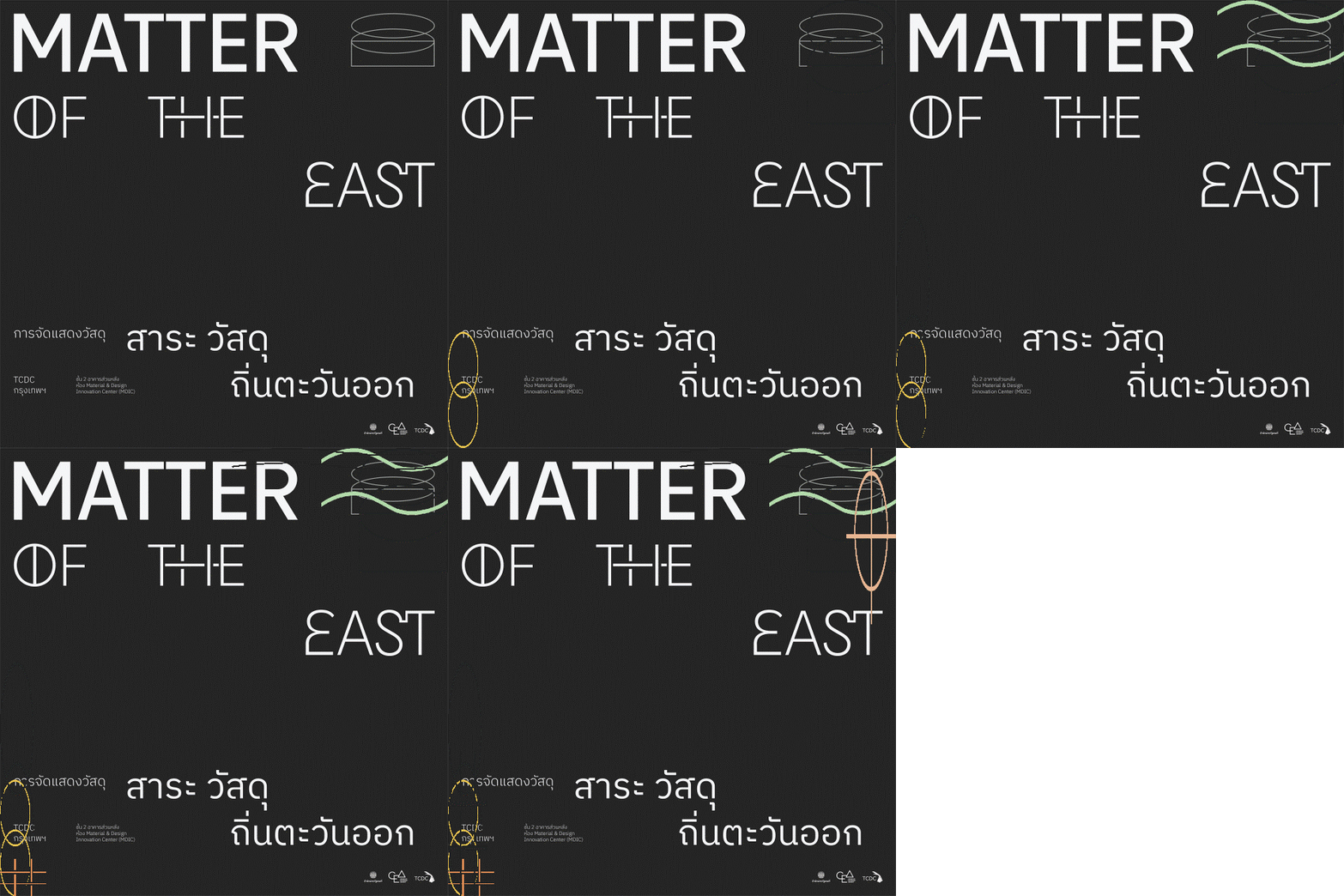
Material Showcase “Matter of The East : สาระ วัสดุถิ่นตะวันออก”
Description
วันที่จัดแสดง : 1 ตุลาคม - 26 ธันวาคม 2564 สถานที่ : ศูนย์นวัตกรรมด้านวัสดุและการออกแบบ ชั้น 2 อาคารส่วนหลัง TCDC กรุงเทพฯ Date: 1 October - 26 December 2021 Venue: Material & Design Innovation Center (MDIC), Fl.2, TCDC Bangkok
Subject
tcdcarchive / handcraft / bamboo / materials / value / design / tradition / community / innovation / leftover / technology
Details
File Format
text/html
Material Showcase “Matter of The East : สาระ วัสดุถิ่นตะวันออก”
วันที่จัดแสดง: 1 ตุลาคม - 26 ธันวาคม 2564
Date: 1 October - 26 December 2021
สถานที่: ศูนย์นวัตกรรมด้านวัสดุและการออกแบบ ชั้น 2 อาคารส่วนหลัง TCDC กรุงเทพฯ
Venue: Material & Design Innovation Center (MDIC), Fl.2, TCDC Bangkok

“ภาคตะวันออก” ของประเทศไทย ได้ชื่อว่าเป็นภูมิภาคที่เล็กที่สุด ประกอบไปด้วยพื้นที่ทั้งหมด 7 จังหวัด แต่ยังมีเอกลักษณ์เฉพาะตัวที่โดดเด่น เห็นได้ชัดจากความงามอันน่าทึ่งของท้องทะเลไปจนถึงพื้นที่อุตสาหกรรมที่ทันสมัย
การจัดแสดงวัสดุ “Matter of the East : สาระ วัสดุถิ่นตะวันออก” จะพาคุณไปสัมผัสวัสดุและผลิตภัณฑ์ที่ผลิตขึ้นในพื้นที่ภาคตะวันออก ที่นำเสนอการเล่าเรื่องใหม่ ผ่านคำว่า “Matter” ที่หมายความถึง “สาระสำคัญ” ว่าอะไรเป็นแรงบันดาลใจ เหตุผลหรือวัตถุประสงค์ที่อยู่เบื้องหลัง (Why) เป็นแรงผลักดันให้เกิดการผลิตวัสดุหรือผลิตภัณฑ์เหล่านั้นขึ้นมา (What) สื่อให้เห็นถึงมุมมองของการทำความเข้าใจในความหมายของวัสดุนั้น ๆ จากผู้ประกอบการ (Where) ในสาระสำคัญ 5 กลุ่มวัสดุ ได้แก่ Innovation, Tradition, Geology, Community และ Leftover เพื่อสะท้อนสิ่งที่ผู้คนในภาคตะวันออกเห็นว่า Matter (สาระสำคัญ) ผ่าน Matter (วัสดุ) ที่พวกเขาทำขึ้น
The Eastern part of Thailand has long been recognized as the country’s tiniest region. Nonetheless, this region has established itself as rich and distinct in terms of culture and identity, ranging from the breathtaking beauty of the sea to the cutting-edge industrial sector.
The exhibition "Matter of the East" invites you to take a closer look at the materials and commodities created locally in the East, with the objective of transforming your perception of them. This exhibition will take you to explore the underlying goal, logic, or inspiration that drove these locals to create these one-of-a-kind artifacts. To show why it matters for local people in the East to make such objects (what) via the state of matter of materials they employ (where), those hidden meanings were recovered for the presentations in 5 separate groups, including Innovation, Tradition, Geology, Community, and Leftover.


1. วัสดุกลุ่มขับเคลื่อนจากนวัตกรรม
กลุ่ม “Innovation Matters” คือ วัสดุและผลิตภัณฑ์ที่ผลิตในท้องถิ่นภาคตะวันออก ซึ่งแสดงถึงวิสัยทัศน์ทางความคิดในการตั้งคำถามถึงศักยภาพใหม่ของวัสดุและกระบวนการผลิตที่ยกระดับคุณภาพชีวิตมนุษย์และสังคม
การเปลี่ยนแปลงทางเทคโนโลยีและโลกอย่างรวดเร็ว ได้กระตุ้นให้เหล่านักคิดหัวก้าวหน้าในภาคตะวันออก สนใจที่จะนำนวัตกรรมเข้ามาเพื่อต่อยอดข้อจำกัดของวัสดุแบบเดิมให้ตอบสนองต่อวิถีชีวิตใหม่ เป็นวัสดุและผลิตภัณฑ์ที่มีการใช้งานที่ดีขึ้น แต่ยังคำนึงถึงปัจจัยด้านสิ่งแวดล้อม ทั้งการนำนาโนเทคโนโลยีมาสู่สิ่งทอ ไปจนถึงการปรับแต่งสูตรคุณสมบัติยางในท้องถิ่น
1. INNOVATION MATTERS
This category includes a wide range of locally produced materials and commodities in the Eastern region, ranging from incorporating nanotechnology into textiles to altering local rubber features, all with a forward-thinking mindset that seeks out new materials and manufacturing processes to improve human and social life.
As technology advances rapidly, Eastern inventors are focusing more on inventions that push the boundaries of traditional materials in order to better suit the modern human lifestyle. As a consequence, materials and products become more functional while also taking into account environmental concerns.


1.1 ผ้าบาติกเทคนิคลายเส้นสี MI0083-01
Why: ด้วยความตั้งใจของกลุ่มคนรักงานศิลป์บนผืนผ้า ที่ต้องการผลักดันผ้าบาติกภาคตะวันออกให้ออกสู่สายตานานาชาติ จึงได้พัฒนาเทคนิคการทำลวดลายเฉพาะของกลุ่มขึ้นมาผสานเข้ากับเทคนิคดั้งเดิม
What: ผ้าบาติกลวดลายนวัตกรรมเส้นสี ที่ใช้เทคนิคการเขียนเส้นเทียนเป็นลวดลายฟรีแฮนด์ ผสานเข้ากับเทคนิคการทำลวดลายด้วยบล็อกไม้แบบโบราณ ที่ทางกลุ่มแกะสลักขึ้นมาเอง สามารถแปรรูปเป็นเสื้อผ้าเครื่องแต่งกายตามแบบ
Where: วิสาหกิจชุมชนกลุ่มเพ้นท์ผ้าพฤกษาบาติก ตำบลหนองเหียง จังหวัดชลบุรี
1.1 Batik Fabric Using Colored Stripes Technique MI0083-01
Why: With the intention to showcase Eastern batik on a global scale, a group of art lovers developed a unique pattern-making technique while incorporating the original technique.
What: Batik fabric with innovative color lines is made by using wax-drawing technique to hand-draw the pattern, combined with the technique of making patterns with ancient wooden blocks the group carved themselves. The Batik fabric can be transformed into the desired apparel.
Where: Nhong Heang's Batik Painting Community Enterprise, Chonburi

1.2 ผ้านวัตกรรม
Why: ด้วยการตระหนักเห็นถึงความสำคัญของนวัตกรรมที่จะมาช่วยตอบสนองต่อความต้องการและวิถีชีวิตของคนที่เปลี่ยนไปในปัจจุบัน ทำให้บริษัท ไทยแทฟฟิต้า จำกัด ค้นคว้าวิจัยนวัตกรรมสิ่งทอที่จะมาช่วยยกระดับคุณภาพชีวิตของผู้ใช้งานให้ดีขึ้นด้วยกระบวนการผลิตที่เป็นมิตรกับสิ่งแวดล้อม
What: 1. ผ้าไนลอนเคลือบกาว (PNCE) MI00568-03
- กันน้ำ
- น้ำหนักเบา
- นิยมนำมาใช้ในการทำอุปกรณ์ท่องเที่ยว เช่น ชุดเดินป่า
2. ผ้าซับในไนลอน (BB) MI00568-04
- มีน้ำหนักเบา
- สามารถย้อมสีได้หลากหลาย
- นิยมนำมาใช้ในการตัดเย็บเสื้อผ้าเป็นชิ้นส่วนซับใน
3. ผ้าโพลีเอสเตอร์ ทอลายทแยง (ZA) MI00568-05
- เนื้อสัมผัสคล้ายผลพีช (Peach Skin)
- กันน้ำ
- นิยมนำมาใช้ในการตัดเย็บเสื้อผ้า
4. ผ้าออกซ์ฟอร์ดเคลือบกาวสีขาว (FZ) MI00568-06
- กันน้ำ
- สามารถย้อมสีตามแบบ
- นิยมใช้ตัดเย็บเป็นชุดเครื่องแบบ
5. ผ้ากันไรฝุ่น MI00568-07
ผลิตด้วยเทคโนโลยีเดียวกับการผลิตผ้าสำหรับห้องปลอดเชื้อในอุตสาหกรรมการแพทย์
Where: บริษัท ไทยแทฟฟิต้า จำกัด จังหวัดระยอง
1.2 Innovative Fabric
Why: By realizing the importance of innovation to the lifestyle of the people today, the Thai Taffeta Co., Ltd. has done research on the innovative textiles that can help lift the quality of the users’ lives by using the production process that is environmentally friendly.
What: 1. PNCE MI00568-03
- Water repellent
- Lightweight
- Commonly used for traveling gears such as for trekking
2. 100% Nylon Taffeta (BB) MI00568-04
- Very lightweight
- Customized colors
- Commonly used for lining
3. 100% Polyester Twill (ZA) MI00568-05
- Peach-like texture
- Water repellent
- Commonly used for clothes
4. 100% Polyester Oxford (FZ) MI00568-06
- Water repellent
- Customized colors
- Commonly used for uniform suit
5. Anti-Mite Fabric MI00568-07
Made with the same technology as the fabric made for clean rooms in the medical industry
Where: Thai Taffeta Co., Ltd., Rayong
ผ้าไนลอนเคลือบกาว / PNCE
 ผ้าไนลอนเคลือบกาว / PNCE
ผ้าซับในไนลอน / 100% Nylon Taffeta (BB)
 ผ้าซับในไนลอน / 100% Nylon Taffeta (BB)
ผ้าโพลีเอสเตอร์ ทอลายทแยง / 100% Polyester Twill (ZA)
 ผ้าโพลีเอสเตอร์ ทอลายทแยง / 100% Polyester Twill (ZA)
ผ้าออกซ์ฟอร์ดเคลือบกาวสีขาว / 100% Polyester Oxford (FZ)
 ผ้าออกซ์ฟอร์ดเคลือบกาวสีขาว / 100% Polyester Oxford (FZ)
ผ้ากันไรฝุ่น / Anti-Mite Fabric
 ผ้ากันไรฝุ่น / Anti-Mite Fabric
 1.3 ผ้าฝ้ายทอมือสำหรับเมืองร้อน MI00915-01
Why: ด้วยความตั้งใจที่ต้องการพัฒนาเส้นใยผ้าให้เหมาะสมกับการสวมใส่ในเมืองร้อน จึงเลือกพัฒนาผ้าฝ้ายทอมือที่เสริมด้วยนวัตกรรมการระบายความร้อน
What: ผ้าฝ้ายทอมือเคลือบด้วยสารนาโนอะคริลิก ซึ่งได้รับการรับรองจากศูนย์นาโนเทคโนโลยีแห่งชาติ (NANOTEC)
- เส้นใยมีความเหนียวนุ่ม
- ไม่ขาดง่าย
- ระบายอากาศได้ดี
Where: ธรรมะชาติผ้าทอมือ จังหวัดสระแก้ว
1.3 Hand-Woven Cotton for Tropical Area MI00915-01
Why: Intending to develop a fabric suitable for wearing in the tropical area, she has created hand-woven cotton with the cooling innovation.
What: Hand-woven cotton fabric from artificial silk, coated with nano-acrylic substance has been certified by the National Nanotechnology Center (NANOTEC).
- Soft fiber
- Durable
- Good ventilation
Where: Thammachart Handcraft Center, Sa Kaeo

1.4 เม็ดพลาสติกเรซินจากแป้งมัน MI00884-01
Why: ด้วยแนวคิดการพัฒนาด้านสิ่งแวดล้อมในธุรกิจผลิตและจำหน่ายถุงพลาสติกที่มีการส่งออกไปหลายทวีป ทำให้ บริษัท มัลติแบกซ์ หันมาพัฒนาโครงการถุงพลาสติกที่สามารถย่อยสลายได้ทางชีวภาพ
What: เม็ดพลาสติกชีวภาพที่ย่อยสลายได้ พัฒนาจากเทคโนโลยีของคนไทยในการผสมเม็ดพลาสติกชีวภาพกับแป้งมันสำปะหลังชนิดไม่ดัดแปลงและไม่เติมสารเติมแต่ง พร้อมกับพัฒนาเทคโนโลยีกระบวนการขึ้นรูปใหม่ เพื่อการผลิตถุงพลาสติกที่มีคุณภาพสูง
- ย่อยสลายทางชีวภาพ
- รับแรงได้ดี
Where: บริษัท มัลติแบกซ์ จำกัด (มหาชน) จังหวัดชลบุรี
1.4 Biopolymer Resin MBIO1 MI00884-01
Why: Aiming for the environmental development in the production and distribution business of plastic bags, Multibax Co., Ltd. started a biodegradable plastic bag program.
What: The biodegradable pellets were developed by a Thai technology, mixing the bio pellets with unmodified, no additives tapioca starch while developing molding process technology to produce high quality plastic bags.
- Biodegradable
- Durable, good tensile strength
Where: Multibax Public Co., Ltd., Chonburi

1.5 การขึ้นรูปผลิตภัณฑ์จากยาง
Why: ผู้ผลิตและขึ้นรูปผลิตภัณฑ์จากวัสดุยางหลากหลายชนิด ที่เปิดโอกาสให้กับผู้ประกอบการรายย่อย สามารถออกแบบผลิตภัณฑ์จากยางให้มีคุณสมบัติตามจุดประสงค์ในการใช้งาน โดยไม่มีขั้นต่ำในการผลิต
What: 1. ชิ้นส่วนยางคอมพาวด์ MI00900-01
สามารถปรับแต่งสูตรยางให้มีคุณสมบัติตามต้องการ และนำมาขึ้นรูปทรงในแม่พิมพ์ตามแบบ
2. ชิ้นส่วนซิลิโคน MI00900-02
สามารถปรับแต่งสูตรซิลิโคนให้มีคุณสมบัติตามต้องการ เหมาะสำหรับชิ้นส่วนงานฝาปิด เช่น ปลอกอุด ฝาปิดงานติดตั้งต่าง ๆ
Where: บริษัท ไทย อินโนวา รับเบอร์ จำกัด จังหวัดระยอง
1.5 Molded Rubber Products
Why: The manufacturer/molder of products from various rubber materials gives small entrepreneurs the opportunity to design rubber products that are suitable for the use purposes with no minimum volume of production.
What: 1. Rubber Compound Parts MI00900-01
be able to customize the rubber formula according to specific needs and shaped in a mold as designed.
2. Silicone parts MI00900-02
be able to customize the silicone formula according to particular needs, suitable for sealing parts such as duct seals, installation covers, etc.
Where: Thai Innova Rubber Co., Ltd., Rayong
ชิ้นส่วนยางคอมพาวด์ / Rubber Compound Parts
 ชิ้นส่วนยางคอมพาวด์ / Rubber Compound Parts
ชิ้นส่วนยางซิลิโคน / Silicone Rubber Parts
 ชิ้นส่วนยางซิลิโคน / Silicone Rubber Parts
2. วัสดุกลุ่มรักษาคุณค่าทางรากเหง้าและภูมิปัญญา
กลุ่มวัสดุ “Traditional Matters” แสดงให้เห็นถึงวัสดุและผลิตภัณฑ์ที่ถูกผลิตขึ้นในภูมิภาคตะวันออก ที่ไม่เพียงแต่หยิบเอารากเหง้าความรู้มาเท่านั้น แต่ยังต่อยอดปรับให้เข้ากับวิถีชีวิตสมัยใหม่ด้วย เพื่อให้มรดกทางภูมิปัญญายังคงอยู่ภายใต้การออกแบบและใช้งานในบริบทของปัจจุบัน
เห็นได้ชัดว่าการเข้ามาของยุคดิจิทัลไม่ได้ลบล้างเอกลักษณ์พื้นถิ่นเดิมในภูมิภาคตะวันออก ในทางกลับกันคนในท้องถิ่นส่วนใหญ่ยังคงพยายามรักษาและสืบทอดความรู้และประเพณีจากบรรพบุรุษ เพราะพวกเขามองว่าสิ่งนี้เป็นเครื่องบ่งชี้ร่องรอยของอัตลักษณ์และวัฒนธรรมของพวกเขา โดยการพยายามรักษานั้นไม่ใช่การอนุรักษ์ภาพอุดมคติในอดีตหรือการปฏิเสธความทันสมัย
2. Tradition matters
This category includes certain modernized artifacts that have been altered in a way that honors the local legacy that underpins these current designs, rather than only showing materials and goods that are only made in the traditional sense.
It is clear that the ever-growing digital age has not obliterated the identity that is strongly ingrained in the Eastern region. Furthermore, several attempts have been made by the majority of the locals to preserve the ancient, hands-on knowledge that they see as an indicator of their identities and cultures. What matters is that preservation is not about romanticizing the past or rejecting modernity.

2.1 จักสานหมวกกุยเล้ย MI00848-01
Why: บรรพบุรุษคนจีนที่มาตั้งรกรากในพื้นที่อำเภอบางคล้า จังหวัดฉะเชิงเทราได้สืบทอดงานหัตถกรรมจักสาน “หมวกกุยเล้ย” หรือหมวกทรงกรวย หัวแหลม ปีกกว้าง จากเดิมที่ทำใช้กันในครัวเรือนเพื่อใส่บังแดด พัฒนาจนปัจจุบันเป็นอาชีพเสริมจากการทำสวนของคนในหมู่บ้าน
What: จักสานหมวกกุยเล้ยจากตอกไม้ไผ่ในพื้นที่ สามารถสานได้หลากหลายความถี่ เพื่อความสวยงามและการใช้งานหลากหลาย
Where: กลุ่มจักสานหมวกกุยเล้ย จังหวัดฉะเชิงเทรา
2.1 Kui Lei Hat Weaving MI00848-01
Why: Influenced by the culture of Chinese immigrants to Bang Khla District, Chachoengsao province, the Kui Lai woven hats or cone hats with a pointed top and wide brim originally made in the households to shield the sunlight have become a source of supplemental income for the villagers in addition to farming.
What: The Kui Lai woven hats made of locally grown bamboo strips are made in different patterns for different looks and uses.
Where: Kui Lei Hat Weaving Group, Chachoengsao


2.2 กกสานทำลวดลายไม้ MI00857-01
Why: จากแนวคิดการให้ความสำคัญของการใช้งาน กลุ่มสตรีคลองหอทองจึงพัฒนาภูมิปัญญาการทำเสื่อกก เป็นเสื่อพับที่สามารถขนย้ายง่ายขึ้นและยังต่อยอดผลิตภัณฑ์เสื่อพับให้เป็นสินค้าที่มีการใช้งานหลากหลายมากขึ้น
What: กล่องใส่ของจากเส้นกกสานทำลวดลายไม้ เป็นหัตถกรรมสามใบเถาที่ประกอบไปด้วยบรรจุภัณฑ์ลวดลายเฉพาะ 3 ขนาด จากลายแม่ลูกดกและลายขั้นบันได
Where: กลุ่มสตรีคลองหอทอง จังหวัดปราจีนบุรี
2.2 Woven Sedge Mats in Wood Pattern MI00857-01
Why: Seeing the importance of its functionality, the Women Group of Klong Hor Thong improved the design of the sedge mat and made them foldable for portability as well as expanded the product line by adding more products for various uses.
What: Storage box made of woven sedge in wood pattern. The trio handcrafts comprise 3 sizes of packages in specific patterns including Maelookdog pattern and the Ladder pattern.
Where: Women Group of Klong Hor Thong, Prachinburi

2.3 จักสานไม้ไผ่ความละเอียดสูง MI00866-01
Why: ด้วยความต้องการสืบทอดเทคนิคงานหัตถกรรมจักสานไม้ไผ่ที่มีความประณีต ไม่ให้สูญหายไปจากท้องถิ่น จึงได้ก่อตั้งแบรนด์ “TBHC” เพื่ออนุรักษ์งานจักสานลวดลายดั้งเดิม และลูกชายได้พัฒนาต่อยอดเทคนิคให้ร่วมสมัยภายใต้แบรนด์ “Borriboon”
What: ชิ้นงานจักสานไม้ไผ่ ลายดอกพิกุล ที่มีความละเอียดสูงกว่าผลิตภัณฑ์ตามท้องตลาด สามารถสานขึ้นรูปเป็นผลิตภัณฑ์ได้อย่างหลากหลาย เช่น กระเป๋า เครื่องใช้ต่าง ๆ
Where: บริษัท บริบูรณ์ คราฟท์ จำกัด จังหวัดชลบุรี
2.3 Sophisticated Bamboo Basketry MI00866-01
Why: Having the intention to pass down and preserve the bamboo hand-weaving technique, she founded the brand “TBHC” to preserve the original weaving pattern. Subsequently, her son carried on the legacy and developed the technique, making it more contemporary under the brand “Borriboon”.
What: Their Bamboo woven handicrafts in Bullet Wood pattern are more sophisticated than those in the common market. They can be woven into different products such as bags, useful items, etc.
Where: Borriboon Craft Co., Ltd., Chonburi

2.4 หัตถกรรมเส้นคลุ้ม MI00919-01
Why: เนื่องจากงานจักสาน “คลุ้ม” พืชท้องถิ่นที่ขึ้นตามพื้นที่ชุ่มน้ำ เป็นงานที่ต้องใช้ความละเอียดอ่อนและความพิถีพิถันอย่างมาก ทุกวันนี้จำนวนผู้ผลิตจึงลดลง ทำให้ชาวบ้าน “บ้านช้างทูน” รวมกลุ่มกันเพื่อสืบสานภูมิปัญญาท้องถิ่นให้ยังคงอยู่ ร่วมกับการต่อยอดรูปแบบให้ร่วมสมัย
What: ตะกร้าคลุ้มสานจากกระบวนการผลิตหัตถกรรมเส้นคลุ้ม สามารถทำเป็นผลิตภัณฑ์ต่าง ๆ เช่น ตะกร้า กระบุง
Where: บ้านช้างทูน จังหวัดตราด
2.4 Handcrafts From Catathea Strips MI00919-01
Why: High level of delicacy and meticulousness required to craft woven Catathea, plants grown in wetlands, results in fewer makers nowadays, which inspired the Ban Chang Thun villagers to come together and carry on the local heritage as well as improving the style to be more contemporary.
What: Catathea baskets are made by hand from Catathea strips which can be made into different products such as different shapes of baskets.
Where: Ban Chang Tun, Trat

2.5 จักสานบ้านตาโอ่ง
Why: กลุ่มผู้ผลิตและจัดจำหน่ายผลิตภัณฑ์จักสาน พยายามรักษาการผลิตงานหัตถกรรมพื้นบ้านและภูมิปัญญาท้องถิ่นอย่าง “งอบน้ำเชี่ยว” ให้ยังคงอยู่ พร้อม ๆ กับการเพิ่มศักยภาพของกลุ่มในเชิงพาณิชย์ด้วยการปรับรูปแบบให้ร่วมสมัย และเพิ่มงานหัตถกรรมจากวัตถุดิบท้องถิ่นอย่างอื่น
What: 1. งอบใบจาก MI00920-02
ผลิตจากโครงไม้ไผ่และปิดผิวด้วยใบจากที่ยังคงใช้เทคนิคดั้งเดิมในการเคลือบผิวด้วย “น้ำมันยางธรรมชาติ” ที่แม้ใช้เวลาในการผลิตนาน แต่ให้ความสวยงามและทนทานมากกว่าการเคลือบเชลแล็ก สามารถนำไปใช้ดัดแปลงทำงานตกแต่งภายในได้หลากหลายรูปแบบ
2. จักสานคลุ้ม MI00920-01
ผลิตจากต้นคลุ้มที่ขึ้นในพื้นที่ สามารถดัดเป็นรูปทรงหลากหลายตามการใช้งาน เช่น โครงโคมไฟ ฝาชี
Where: บ้านตาโอ่ง จังหวัดตราด
2.5 Basketry, Ban Ta Ong
Why: A group of manufacturers and distributors of wicker products tries to preserve the production of the Namchiaw hats, the local wisdom, while increasing the Group’s commercial capabilities by adjusting the design to be contemporary as well as adding more products made of the other local materials.
What: 1. Nipa Palm Leaf Hat MI00920-02
Made of bamboo structure and covered with Nipa palm leaves, the pointed hat is still made by using the traditional coating technique, “natural tree sap”. While it takes a long time to complete, it gives a beautiful finish look and is more durable than coating it with shellac. Nipa palm leaves can be modified for various interior designing styles.
2. Catathea Basketry MI00920-01
Catathea basketry is made from the Catathea plants grown in the area. It can be bent to form different shapes depending on the use such as lamp structure, food covers etc.
Where: Wickerwork Ban Ta Ong, Trat

2.6 กกทอลายขิด MI00913-01
Why: กลุ่มผู้ผลิตผลิตภัณฑ์ท้องถิ่นที่อพยพมาจากภาคอีสาน ที่อยากนำเอาภูมิปัญญาทางภาคอีสานมาประยุกต์ใช้ในพื้นที่จังหวัดสระแก้ว
What: แผ่นกกทอลายขิดจากกกไหลเส้นแบบที่ถูกย้ายถิ่นฐานมาพร้อมกับกลุ่มชาวอีสาน โดยนำมาทอด้วยลวดลายที่ประยุกต์จากผ้าลายขิด จึงเกิดเป็นผลิตภัณฑ์จากกกที่มีเอกลักษณ์ของบ้านถาวรสามัคคีซึ่งแตกต่างจากของละแวกใกล้เคียง
Where: กลุ่มสตรีบ้านถาวรสามัคคี จังหวัดสระแก้ว
2.6 Woven Papyrus Sheets with Khid Pattern MI00913-01
Why: The local product manufacturing group migrated from Isan region, hoping to integrate the region’s knowledge to everyday life in Sa Kaeo province.
What: Woven into a pattern inspired by the Khid patterned silk, the woven sedge sheets in Khid pattern are made from sedge strips the Isan immigrants brought over, creating unique products of the ‘Ban Tha Worn Sa Muk Kee’ village that are different from the neighboring areas.
Where: Ban Tha Worn Sa Muk Kee Group, Sa Kaeo

2.7 ผ้าไหมมัดหมี่ลายริบบิ้น MI00860-01
Why: จากความสนใจในผ้าไหมไทยของ นันทวันไหมไทย ที่เริ่มต้นจากการทอเพียงกี่เดียว ได้ขยายและต่อยอดเป็นผลิตภัณฑ์อื่น ๆ ที่ร่วมสมัยมากขึ้น จนกลายเป็นร้านผ้าไหมที่มีชื่อเสียงของจังหวัดปราจีนบุรี
What: ผ้าไหมมัดหมี่ลายประยุกต์ ทำเป็นลายริบบิ้น
Where: นันทวันไหมไทย จังหวัดปราจีนบุรี
2.7 Ikat Thai Fabric MI00860-01
Why: Starting as an interest, Nanthawan Thai Silk now became a well-known Thai silk shop in Prachinburi from just one loom of silk. Subsequently, the business expanded and developed other contemporary products.
What: Tie-dyed silk made in modern ribbon print
Where: Nanthawan Thai Silk, Prachinburi

2.8 ผ้ามัดหมี่ลวดลายดั้งเดิม MI00914-01
Why: แม้ปัจจุบันคนทอผ้าไหมมัดหมี่แบบดั้งเดิมในชุมชนลดน้อยลง แต่กลุ่มสตรีทอผ้าบ้านหันทรายยังคง พยายามรักษารูปแบบการทอด้วยกี่ทอมือแบบโบราณ และลวดลายดั้งเดิมไว้ไม่ให้สูญหาย
What: ผ้าฝ้ายและผ้าไหมมัดหมี่ทอลวดลายดั้งเดิมของจังหวัดสระแก้ว เช่น ลายนากร้อย ดางแห หมี่ซ้าย หมี่ ขวา ขอกระบวย เยี่ยวควาย ซึ่งทอด้วยครอบครัวผู้สืบสานภูมิปัญญามาตั้งแต่อดีต
Where: กลุ่มสตรีทอผ้าบ้านหันทราย จังหวัดสระแก้ว
2.8 Tie-Dyed Fabric with Traditional Pattern MI00914-01
Why: Even though there are fewer traditional tie-dyed silk weavers, the Banhansai weaving woman group continues to preserve the traditional pattern and hand-weaving technique using ancient looms.
What: The Sa Kaeo province’s tie-dyed cotton and silk in patterns such as Nakroi pattern, Danghae pattern, Misai pattern, Mikwa pattern, Kohkrabuay pattern, and Yiewkwai pattern are woven by the families who have been carrying on the wisdom since the old days.
Where: Banhansai Weaving Woman Group, Sa Kaeo

2.9 ผ้าขาวม้าทอมือลวดลายดั้งเดิม MI00881-01
Why: ผ้าทออ่างศิลาที่ได้รับการพัฒนาโดยสมเด็จพระพันวษากำลังจะสูญหายไป เหลือเพียงคุณยายหง่วนในวัย 94 ปี ผู้สืบทอดองค์ความรู้คนสุดท้ายของหมู่บ้านมาบหม้อ ได้จุดประกายให้ทายาทรุ่นหลังอยากจะรักษาและสืบทอดองค์ความรู้ จนก่อตั้งเป็นศูนย์การเรียนรู้เพื่อเผยแพร่ภูมิปัญญาให้กับคนรุ่นหลัง และสร้างอาชีพให้กับคนในชุมชน
What: ผ้าขาวม้าทอมือลายเกล็ดเต่า ลวดลายดั้งเดิมของชาวอ่างศิลา
Where: วิสาหกิจชุมชนผลิตภัณฑ์ผ้าทอมือคุณยายหง่วน (บ้านมาบหม้อ) จังหวัดชลบุรี
2.9 Hand-woven Loincloth in Traditional Pattern MI00881-01
Why: The Angsila textile developed by Her Royal Highness Prapanwasa is disappearing. The Mabmo village’s last successor of the knowledge is 94-year-old Ms. Nguan. She inspired the new generation to preserve and carry on the knowledge by founding the learning center for the purpose of passing on the knowledge to the next generations and creating a career for the community.
What: Hand-woven loincloth in the turtle shell pattern, the original pattern of Angsila
Where: Nguan's Handwoven Textile Product Community Enterprise, Chonburi

2.10 ผ้าขาวม้าทอลวดลายสมัย ร.5 MI00882-01
Why: ด้วยความต้องการสืบทอดลวดลายผ้าดั้งเดิมของชาวอ่างศิลา ทำให้กำนันนำผ้าทอโบราณลายดั้งเดิมสมัยรัชกาลที่ 5 ไปทำการวิจัยแกะลวดลายโดยผู้เชี่ยวชาญทางภาคอีสาน เพื่อรวบรวมเป็นองค์ความรู้ถ่ายทอดให้กับคนรุ่นหลัง และเพื่อพัฒนาเป็นผลิตภัณฑ์ที่มีความร่วมสมัย
What: ผ้าขาวม้าทอมือลวดลายดั้งเดิมจากสมัยร. 5 ได้แก่ ลายตาสมุก ลายดอกราชวัตร ลายนกกระทา ลาย ทางรอบตัว
Where: ชมรมผ้าทอมือบ้านปึก (อนุรักษ์ผ้าทออ่างศิลา) จังหวัดชลบุรี
2.10 Loincloth in the RAMA V Era Patterns MI00882-01
Why: With the intention to preserve the traditional pattern belonging to Angsila people, the village chief asked an expert in the Isan region to do a research and recreate the pattern created in the RAMA V era in order to pass the knowledge to the next generations and improve the products to have a contemporary style.
What: The traditional patterns from the RAMA V era include the Tasamook pattern, the Ratchawat flower pattern, the Quail pattern and the all stripe pattern.
Where: Handwoven Textile Club of Ban Puek, Chonburi

2.11 เซรามิกวาดลายเบญจรงค์ร่วมสมัย MI00879-01
Why: จากความสนใจและการฝึกฝนการทำเบญจรงค์มาตั้งแต่เด็ก ทำให้ยังคงรักษาและพัฒนาเทคนิคการทำเบญจรงค์ที่มีความประณีตและคุณภาพสูงอย่างต่อเนื่องได้จนปัจจุบัน
What: งานเบญจรงค์ที่ทำลวดลายด้วยน้ำทองคุณภาพสูง 12% นำเข้าจากประเทศเยอรมัน
- สีไม่เปลี่ยนเฉด และไม่ลอกเมื่อถูกใช้งาน
- สามารถนำเซรามิกมาได้เอง เพื่อวาดลวดลาย
Where: ไทยเบญจรงค์ จังหวัดชลบุรี
2.11 Contemporary Benjarong MI00879-01
Why: Having been interested in the Benjarong wares and sharpening his skills of the making since childhood, he continues to preserve and develop the delicate and high-quality technique until today.
What: The Benjarong work’s pattern is drawn with high quality 12% gold water imported from Germany.
- Long lasting color, no peeling after use
- Able to bring your won ceramic ware for painting.
Where: Thai Benjarong, Chonburi

2.12 ภาพนูนต่ำจากกระดาษสาเลียนผิวโลหะ MI00874-01
Why: ช่างศิลป์ผู้มีฝีมือได้นำเทคนิคเชิงศิลป์มาต่อยอดโดยการถอดภาพสองมิติ ให้กลายเป็นประติมากรรม ภาพนูนต่ำ
What: ภาพนูนต่ำจากกระดาษสา ผสานเทคนิคปัดสีเลียนแบบผิวโลหะ เกิดเป็นชิ้นงานที่มีมิติคล้ายวัสดุโลหะ จริง
Where: วิสาหกิจชุมชนบ้านดอกกราย จังหวัดระยอง
2.12 Bas-Relief From Metallic Mulberry Papers MI00874-01
Why: A skillful artist uses the art technique to transform the 2D images into bas-relief sculptures.
What: Bas-relief made of mulberry papers integrated with metallic coating to create dimensional metal-like objects
Where: Baan Dok Krai Community Enterprise, Rayong

2.13 ทองเหลืองสาน MI00845-01
Why: จากความผูกพันกับแม่น้ำบางปะกง จึงริเริ่มพัฒนาการสาน ภาชนะที่ใช้ในชีวิตประจำวันด้วยไม้ไผ่ ที่สื่อถึงวิถีชีวิตของคนลุ่มแม่น้ำ เช่น กระจาด สุ่ม ไทร ตะกร้า อีจู้ แล้วเปลี่ยนมาสานด้วยทองเหลือง
What: ทองเหลืองสานเป็นเครื่องใช้และของที่ระลึก ใช้เทคนิคการจักสานไม้ไผ่เข้ามาผสมผสานลวดลายเด่น คือ ลายก้างปลา ลายดอกพิกุลขนาดเล็ก และลายกลาง
Where: กลุ่มทองเหลืองสานท่าไข่ จังหวัดฉะเชิงเทรา
2.13 Woven Brass MI00845-01
Why: The love for the Bangpakong River inspired us to transform everyday items that reflect the life of the residents by the river. Originally woven with bamboo, the items such as trays, coops, baskets and fish-traps are woven with brass.
What: Brass is woven into objects and souvenirs by integrating the bamboo weaving technique. The popular patterns are the fish-bone pattern, the small Bullet Wood flower pattern, and the Klang pattern.
Where: Brass Weaving Group of Tha Kai, Chachoengsao


3. วัสดุกลุ่มนำแรงบันดาลใจจากธรรมชาติในท้องถิ่น
กลุ่มวัสดุ “Geology Matters” แสดงถึงวัสดุและผลิตภัณฑ์ของผู้ผลิตในภาคตะวันออกที่ได้รับแรงบันดาลใจ จากทรัพยากรในภูมิภาคเก็บมาประดิษฐ์และผลิตให้เป็นสินค้าที่มีคุณค่า
พื้นที่ภาคตะวันออกถูกห้อมล้อมไปด้วยธรรมชาติที่งดงามและอุดมสมบูรณ์ของสภาพแวดล้อมชายฝั่งทะเล รวมถึงพืชพรรณและแร่ธาตุนานาชนิด ทำให้วัสดุและผลิตภัณฑ์มากมายในพื้นที่นี้ ถูกสร้างขึ้นผ่านการพัฒนาความสัมพันธ์ที่ใกล้ชิดและการเห็นคุณค่าของทรัพยากรในท้องถิ่น คนในท้องถิ่นได้พัฒนาวิธีที่พวกเขารับรู้และใช้ประโยชน์จากธรรมชาติโดยรอบ เพื่อสร้างวัสดุสำหรับการใช้งานที่หลากหลายและถ่ายทอดความรู้สึกของพื้นที่
3. Geology Matters
This category highlights the materials and products of Eastern producers who are inspired by the region’s natural resources, which are collected and turned into valuable items.
Surrounded by a magnificent coastal zone rich in plants and minerals, the bulk of materials and goods in this Eastern region are made in a way that emphasizes the region’s intimate ties to its natural resources. The inhabitants have developed an instinct for using these natural resources to create materials that can be utilized for a number of functions while also expressing a sense of place.


3.1 จักสานใบลาน บ้านทับลาน
Why: เนื่องจากพื้นที่ “ทับลาน” ตำบลบุพราหมณ์ เต็มไปด้วยป่าลานที่อุดมสมบูรณ์ที่สุดผืนสุดท้ายของประเทศไทย ชาวบ้านจึงนำใบลานที่มีสีขาวสะอาดตามธรรมชาติแม้ยังไม่ย้อมสีและมีความเหนียว มาผลิตเป็นสินค้าแปรรูปที่น่าสนใจนานาชนิด
What: 1. ใบลานสานลวดลายผูกนิลวรรณ MI00861-02
“ลายผูกนิลวรรณ” เป็นลายสานเอกลักษณ์ที่พัฒนาขึ้นจากคนในหมู่บ้านทับลาน สามารถทำผลิตภัณฑ์ได้หลากหลาย เช่น กระเป๋า หมวก กล่องทิชชู่ เป็นต้น
2. ตอกใบลานสีธรรมชาติ (น้ำยางประดู่) MI00861-02
ตอกใบลานที่ใช้ในการจักสาน เกิดจากการคัดเลือกยอดใบสูงสุดที่มีอายุประมาณ 30-40 ปีขึ้นไป มีสีขาวนวล มาทำการฉีกให้เป็นเส้นตอก ก่อนนำไปตากแดดให้แห้ง แล้วจึงนำไปย้อมสีธรรมชาติอย่างเช่น ประดู่
Where: กลุ่มจักสานใบลาน บ้านทับลาน จังหวัดปราจีนบุรี
3.1 Palm Leaf Basketry, Ban Thublan
Why: Since the “Thublan” area of the Bu Phram sub-district is occupied by Thailand's last luscious palm forest, the villagers had the idea to turn these durable natural white, clean leaves, even without coloring, into various interesting products.
What: 1. The Phookninlawan pattern on the woven palm leaves MI00861-02
The ‘Phookninlawan pattern’ is a unique woven pattern created by the Thublan villagers. It can be made into different products such as handbags, hats, and tissue boxes.
2. Natural-colored palm leaf stripes (Burmese Padauk sap) MI00861-02
Before woven, the palm leaf stripes are selected from the highest tips that are over 30-40 years old. The off-white leaves are torn before being dry in the sun and dyed in natural color such as the Burmese Padauk sap.
Where: Palm Leaf Weaving Group of Ban Thuplan, Prachinburi


3.2 กระจูดจักสานบ้านมาบเหลาชะโอน MI00886-01
Why: จากพืชท้องถิ่น “กระจูด” ที่ขึ้นในพื้นที่ชุ่มน้ำของจังหวัดระยอง ชาวบ้านบ้านมาบเหลาชะโอนจึงนำมาต่อยอดเป็น “เครื่องจักสาน” สร้างรายได้ให้กับคนในชุมชน
What: จักสานกระจูด ผลิตจากกระจูดที่ปลูกภายในพื้นที่สวนพฤกษศาสตร์ นำมาจักสานขึ้นรูปเป็นผลิตภัณฑ์ต่าง ๆ เช่น กระเป๋า ตะกร้า แจกัน รองเท้า
Where: วิสาหกิจชุมชนกลุ่มจักสานกระจูดมาบเหลาชะโอน จังหวัดระยอง
3.2 Bulrush Basketry, Ban Map Lao Cha-on MI00886-01
Why: The residents of Ban Map Lao Cha-on add value to Bulrush, a plant grown natively in the wetlands of Rayong province, to create income for the people in the community.
What: Bulrush grown in the botanical garden can be woven into different kinds of products such as handbags, baskets, vases, and shoes
Where: Map Lao Cha-on’s Krajood Weave Community Enterprise, Rayong

3.3 หินสีธรรมชาติ MI00916-01
Why: จากความสนใจในเอกลักษณ์ของหินธรรมชาติในพื้นที่จังหวัดสระแก้วและพื้นที่ชายแดนใกล้เคียง ทำให้เกิดการรวมตัวกันเพื่อแปรรูปหินเป็น “ลูกปัด” ที่มีเอกลักษณ์ด้วยสีสันและลวดลายที่สวยงามเฉพาะตัว
What: หินสีธรรมชาติที่เก็บได้จากไร่นาในจังหวัดสระแก้ว เช่น หินอะเกต หินคานาเลียน เป็นต้น สามารถนำไปใช้ในการร้อยเป็นเครื่องประดับ เครื่องรางนำโชค หรือใช้เป็นของตกแต่งได้หลากหลายรูปแบบ
Where: กลุ่มหัตถกรรมบ้านสร้อยลูกปัด หินสี หินหยก จังหวัดสระแก้ว
3.3 Multicolor Natural Stone MI00916-01
Why: From a mutual interest in the gemstones in Sa Kaeo province and nearby border area, the group came together with the goal to transform the gemstones into “beads” with unique colors and patterns.
What: The natural gemstones are collected from the farms in Sa Kaeo province, such as agate and carnelian. They can be made into accessories, charms, and many styles of decorations.
Where: Ban Soi Lookpad Handcraft Group, Sa Kaeo

3.4 ผ้ามัดย้อมจากโคลนบ่อพลอย MI00792-03
Why: การเข้ามาของระบบเหมืองอุตสาหกรรมทำให้บ่อพลอยเหล็กเพชร ที่ยังคงอนุรักษ์กระบวนการขุดเหมืองแบบโบราณเอาไว้ จึงเปิดเป็นศูนย์การเรียนรู้สถานที่ท่องเที่ยวแบบนวัตวิถีและต่อยอดทรัพยากรที่มีอยู่อย่างบ่อพลอยให้เป็นผลิตภัณฑ์ที่มีเอกลักษณ์
What: ผ้ามัดย้อมจาก “โคลนบ่อพลอยเหล็กเพชร” ที่สีของโคลนมีความเฉพาะตัว เป็นโทนสีน้ำตาลอ่อนและโทนสีเหลือง จึงนำมาพัฒนาสีให้ร่วมสมัยโดยการใช้โคลนบ่อพลอยย้อมร่วมกับเกลือ
Where: บ่อพลอยเหล็กเพชร จังหวัดจันทบุรี
3.4 Mud Dying from Gemstone Mine MI00792-03
Why: The arrival of the industrial mining system caused Bohploy Lekphet to preserve the traditional mining process by opening a learning center, an innovative lifestyle attraction, and adding value to the existing, unique mining pool.
What: The tie-dyed fabric was innovated by using ‘Bohploy Lekphet mud’ with salt in order to make it contemporary, resulting in unique shades of light brown and yellow.
Where: Indy Stone Jewelry, Chanthaburi

3.5 ผ้าย้อมจากวัตถุดิบธรรมชาติของจังหวัดระยอง
Why: ลีลาฝ้าย เกิดขึ้นจากความต้องการในการต่อยอดทักษะตัดเย็บผ้าไทยของคุณแม่ ซึ่งเป็นภูมิปัญญาจากทางภาคอีสานมาในพื้นที่จังหวัดระยอง จึงมองหาวัตถุดิบพื้นถิ่นที่มีอยู่ของจังหวัดระยองมาประยุกต์ใช้ร่วมกับเทคนิคดั้งเดิม
What: 1. ผ้าย้อมโคลนทะเล MI00888-01
วัตถุดิบที่หาได้ตามธรรมชาติในพื้นที่ชุ่มน้ำชายฝั่งทะเล อย่าง “โคลนจากปากคลองบ้านพลา” ที่มีเนื้อละเอียด บริสุทธิ์ สีเทานวลเนียน ไร้กลิ่น ถูกนำมาเป็นวัตถุดิบตั้งต้นในการหมักผ้าฝ้ายและผ้าไหมที่ชาวบ้านเลี้ยงในชุมชน
- โคลนตามธรรมชาติช่วยจับเนื้อสี ทำให้สีย้อมสดขึ้น และติดทนนาน
- ช่วยให้ผ้ามีน้ำหนักและทิ้งตัว ซักแล้วไม่หดยุ่ย
2. ผ้าพิมพ์ลายธรรมชาติ MI00888-02
การพิมพ์ผ้าให้เกิดลวดลายและสีจากใบไม้ธรรมชาติลงบนผ้า (Eco Printing)
Where: ลีลาฝ้าย จังหวัดระยอง
3.5 Tie-Dyed Fabric from Natural Materials in Rayong
Why: Lee La Fai was created from the need to bring mom’s skill of Isan style sewing to Rayong by incorporating native materials with the traditional techniques.
What: 1. Sea Mud Tie-Dye MI00888-01
Raw materials found naturally in the saltwater area like “Mud from Pak Khlong Banpla” with odorless, gray, fine and smooth texture was used as a starting material for fermenting cotton and silk raised by the community.
- Natural mud helps capture the color, making the dye fresher and last longer
- The fabric has volume. It does not shrink or fray.
2. ECO-Printing on Fabric MI00888-02
Colors and patterns are printed from local leaves with Eco Printing technique.
Where: Lee La Fai, Rayong


3.6 ผ้าขาวม้าซาวตม MI00917-01
Why: ชุมชนบ้านหนองโกวิทมองเห็นคุณค่าจากสินทรัพย์ทางธรรมชาติ อย่างโคลนจากหนองน้ำและพืชพรรณที่ขึ้นในพื้นที่
What: ผ้าขาวม้าย้อมโคลนจากธรรมชาติและพืชพรรณที่ขึ้นในพื้นที่อย่างดอกดาวเรือง กระโดน ใบยูคาลิปตัส ซึ่งให้สีที่แตกต่างกัน พัฒนามาเป็น “ผ้าขาวม้าซาวตม” ที่ทอด้วยกี่โบราณและมีการต่อยอดเป็นผลิตภัณฑ์ใช้สอยต่าง ๆ
Where: วิสาหกิจชุมชนกลุ่มผ้าทอมือบ้านหนองโกวิทย์ จังหวัดสระแก้ว
3.6 Mud Dyed Loincloth Kamar Fabric MI00917-01
Why: The Ban Nong Kowit community sees the value in natural resources such as mud from the swamp and plants growing in the area.
What: Loincloths are dyed with natural mud and plants grown in the area such as marigolds, tummy-woods and eucalyptus leaves to create different colors. The loincloths are woven by the ancient loom and crafted into different products.
Where: Ban Nong Kowit's Handwoven Textile Community Enterprise, Sa Kaeo

3.7 ผ้าใส่กลิ่นต้นชะลูด MI00902-01
Why: การเข้ามาของหน่วยงานเอกชนที่ดึงคนรุ่นใหม่เข้ามาช่วยต่อยอดวิสาหกิจชุมชนมาบชลูด ทำให้สามารถดึงเอาเอกลักษณ์ของ “เปลือกต้นชะลูด” วัสดุท้องถิ่นที่มีกลิ่นหอม นำมาพัฒนาเสริมเป็นจุดเด่นใส่ในผลิตภัณฑ์กระเป๋า
What: กระเป๋าผ้ากันน้ำใส่กลิ่นต้นชะลูด ที่ตัดเย็บโดยใช้ผ้า 5 ชั้น ได้แก่ ผ้านอก 2 ชั้น ใยสังเคราะห์ 2 ชั้น และผ้าเต็นท์ 1 ชั้น
- กันน้ำ
- รูปทรงไม่เสียหลังซัก
- กลิ่นหอมยาวนาน 3 ปี
Where: วิสาหกิจชุมชนผลิตภัณฑ์จากผ้าชุมชนมาบชลูด จังหวัดระยอง
3.7 Madagascar Jasmine Scented Cloth MI00902-01
Why: Having help from the private company and the new generations, Map Chalut community enterprise was able to extract the unique scent from the local material, Madagascar jasmine bark, to complement the handbags.
What: Waterproof fabric handbags with Madagascar jasmine scent are constructed from 5 layers of fabrics including 2 outer layers, 2 layers of synthetic fabric and 1 layer of the tent material.
- Waterproof-resistant
- Shape retains after wash
- Aromatic scent lasts 3 years
Where: Map Chalud's Fabric Product Community Enterprise, Rayong

3.8 แผ่นพลาสติกสานสะท้อนวัฒนธรรม MI00846-01
Why: แรงบันดาลใจจากแสงอาทิตย์ยามเช้าที่ส่องกระทบ “แม่น้ำบางปะกง” แม่น้ำแห่งชีวิตของชาวแปดริ้ว ทำให้ พอลอันดา นำแรงบันดาลใจนี้ไปออกแบบผลิตภัณฑ์จักสานจากเส้นพลาสติกที่สะท้อนถึงวัฒนธรรม
What: แผ่นพลาสติกสานในคอลเล็กชั่น ‘Bangphakong of Life’ ที่ใช้สีของเส้นพลาสติกแบ่งเป็น สีโทนร้อน สีโทนเย็น สานลวดลายและสีที่สื่อถึงแสงอาทิตย์ในยามรุ่งอรุณ ด้านในได้ตกแต่งด้วยผ้าขาวม้าทอมือจากกลุ่มสตรีบ้านนายาว จังหวัดฉะเชิงเทรา
Where: พอลอันดา จังหวัดฉะเชิงเทรา
3.8 Woven Plastic Sheets to Reflect The Culture MI00846-01
Why: Being inspired by the morning sunlight shining against ‘Bangphakong’ river, the river of life to the Pad-Rew residents, Paul An’Da designed the basketry to reflect such culture.
What: The colors of the woven plastic sheets used in the ‘Bangphakong of Life’ collection are grouped into the hot shade and the cool shade. The colors and patterns reflect the morning sunlight. The lining of the bags is decorated with loincloths handwoven by the Ban Na Yao women group of Chachoengsao province.
Where: Paul An'da by kitinadda, Chachoengsao

4. วัสดุกลุ่มกำเนิดจากพลังของชุมชน
กลุ่มวัสดุ “Community Matters” แสดงให้เห็นถึงวัสดุและผลิตภัณฑ์ที่เกิดขึ้นจากพลังการรวมกลุ่มของชุมชนภูมิภาคตะวันออกเพื่อสร้างโอกาสให้กับพี่ ๆ น้อง ๆ ในพื้นที่เดียวกัน
ด้วยวิถีชีวิตการอยู่ร่วมกันอย่างพึ่งพาอาศัยของชาวบ้านมาตั้งแต่อดีตในพื้นที่ภูมิภาคตะวันออก ทำให้หลายวัสดุและผลิตภัณฑ์ที่ผลิตขึ้นนั้น เกิดจากความช่วยเหลือเกื้อกูลกันในชุมชน ผลักดันให้เกิดการรวมกลุ่มเพื่อสร้างงานและอาชีพ แนวความคิดนี้ได้ฝังรากลึกในผู้คนภาคตะวันออกจนปัจจุบันไม่หยุดที่จะต่อยอดและพัฒนากลุ่ม ไม่ว่าจะเป็นการสร้างความเข้มแข็งทางองค์ความรู้หรือการระดมทุน ทั้งนี้เพื่อเพิ่มศักยภาพของสินค้าชุมชนในเชิงพาณิชย์
4. Community matters
This category promotes the resources and commodities generated by Eastern communities’ strength and power in order to provide opportunities for their fellow members in the same region.
The Eastern way of life has been based on the notion of the interconnected community since ancient times. As a consequence of members’ willingness to support and generate income, several types of local materials and goods have been developed. People in the community have been shaped by a mindset that pushes them to help one another in a variety of ways, from knowledge sharing to income creation, in order to increase the commercial potential of communal products.


4.1 กกสานจากกลุ่มชุมชนบ้านท่าแฉลบ
Why: วิสาหกิจชุมชนที่ตั้งขึ้นเพื่อเป็นศูนย์กลางในการรับสินค้าจากคนในชุมชนที่ผลิตและออกแบบสินค้าหัตถกรรมจากกกที่ปลูกในท้องถิ่น และเปิดเป็นศูนย์เรียนรู้ให้บุคคลทั่วไปเข้ามาเรียนรู้การทอเสื่อกก
What: 1. แผ่นกกสานลาย MI00842-01
กกสานเป็นผืนร่วมกับเส้นปอกระเจา ด้วยเทคนิคพิเศษที่เรียกว่า การทอยกดอก ซึ่งมี “ลายเชิงกะได” เป็นลวดลายเฉพาะของทางกลุ่ม
2. เสื่อกกสานตะไคร้ MI00842-02
เสื่อกกที่สานร่วมกับเส้นตะไคร้ มีคุณสมบัติช่วยกันยุง
Where: วิสาหกิจชุมชนกลุ่มเสื่อบ้านท่าแฉลบ จังหวัดจันทบุรี
4.1 Woven Sedge From Ban Tha Chalab Community
Why: This community enterprise was founded with the purpose of being a consignment center for the people in the community who produce and design handcrafts made of locally grown sedges. It is also a learning center for the public to come and learn how to weave sedge mats.
What: 1. Pattern Woven Sedge Sheets MI00842-01
Sedges are woven together with jute strands using a technique called the “Yok Dok” weaving (flower embossing technique), with “Lai Cheong Kadai” (the ladder pattern) as a signature pattern of this community.
2. Lemongrass-Sedge Mats MI00842-02
Sedge mats are woven together with lemongrass which contains mosquito repellent property.
Where: Ban Tha Chalab's Mat Community Enterprise, Chanthaburi


4.2 เสื่อกกสานลายสองหน้า MI00843-01
Why: วิสาหกิจชุมชนตั้งขึ้นเพื่อเป็นศูนย์กลางในการส่งเสริมศักยภาพการผลิตและออกแบบสินค้าหัตถกรรมจากกกที่ปลูกในท้องถิ่นด้วยการควบคุมคุณภาพ นำเสนอเทคนิคใหม่ ๆ พร้อมกับสร้างแบรนด์ให้ร่วมสมัยเพื่อการส่งออก
What: ผลิตภัณฑ์จากเสื่อกกที่ทำลวดลายทั้งสองหน้า
- การทอมีความละเอียด
- เห็นลายทอได้ทั้งสองด้าน
Where: วิสาหกิจชุมชนศูนย์หัตถกรรมทอเสื่อกกบ้านเสม็ดงาม จังหวัดจันทบุรี
4.2 Double-Sided Pattern Sedge Mats MI00843-01
Why: The community enterprise was founded with the purpose of promoting the production and design capabilities of handcrafted products made of locally grown sedges by quality controlling, presenting new techniques and building a contemporary brand for exportation.
What: Products made from sedge mats come with patterns on both sides.
- The weaving process is delicately done.
- The pattern can be seen on both sides.
Where: Ban Samed Ngarm's Handcraft Reed Mat Learning Center Community Enterprise, Chanthaburi

4.3 กกสาน บ้านบางพลวง MI00895-01
Why: จากปัญหาภัยน้ำท่วมในหมู่บ้านบางพลวง ทำให้เริ่มนำเอาต้นกกที่ปลูกในพื้นที่มาทอเป็นผืน และจัดตั้งกลุ่มจนเป็นวิสาหกิจชุมชนเพื่อสร้างศักยภาพของผลิตภัณฑ์จากกกในพื้นที่ในเชิงพาณิชย์มากยิ่งขึ้น
What: แผ่นกกสานในพื้นที่บางพลวง ที่ทำลวดลายหลากหลายทั้งลายดั้งเดิม และลายประยุกต์เป็นตัวอักษรภาษาไทยและภาษาอังกฤษ สามารถนำมาขึ้นรูปเป็นผลิตภัณฑ์ได้หลากหลาย เช่น วัสดุหุ้มกระเป๋าเดินทาง กระเป๋าคอมพิวเตอร์ แฟ้มเอกสาร เป็นต้น
Where: วิสาหกิจชุมชนแปรรูปเสื่อกก บ้านบางพลวง จังหวัดปราจีนบุรี
4.3 Woven Sedge Sheets, Baan Bang Pluang MI00895-01
Why: Flood problems in the Bang Pluang village inspired the owner to weave the locally grown sedges into sheets. Starting with a group, it has now become a community enterprise with the goal to build the commercial potential of local sedges as products.
What: Woven sedge sheets are made by the Bang Phluang village in a variety of patterns, including the traditional and creative patterns with the Thai and English alphabets. Sedge sheets can be formed into different products such as luggage covers, computer bags, and briefcases.
Where: Baan Bang Pluang's Reed Processing Community Enterprise, Prachinburi


4.4 จักสานพนัสนิคม
Why: จากภูมิศาสตร์ที่อุดมไปด้วยไม้ไผ่ในย่านพนัสนิคม ทำให้เกิดเป็นภูมิปัญญา “หัตถกรรมจักสาน” ตั้งแต่อดีตสืบทอดและพัฒนาจนมาเป็นศูนย์กลางงานจักสานที่สำคัญแห่งหนึ่งของประเทศในปัจจุบัน สร้างรายได้ให้กับชุมชนโดยเป็นศูนย์กลางในการรับและกระจายงานจักสานไปยังกลุ่มชาวบ้านแต่ละครัวเรือน
What: 1. ถาดเต็งลั้งกลม MI00868-01
ด้วยเทคนิคการสานไม้ไผ่แบบดั้งเดิม ใช้สำหรับใส่ของหรือประดับตกแต่ง
2. โคมไฟสานจากไม้ไผ่ MI00869-01
ไม้ไผ่ตอกเส้นเล็กแบน นำมาสานเป็นรูปทรงสำหรับใช้เป็นโคมไฟหลากหลายสีและขนาด
3. ปอห้า MI00869-02
ไม้ไผ่ถักเป็นห่วงกลม นำมาร้อยเป็นเส้นคล้ายโมบาย สามารถใช้ในงานประดับตกแต่งหรือแขวนเป็นม่าน
4. โคมไม้ไผ่ MI00872-01
นำเทคนิคการทำกรงนกที่ขึ้นรูปด้วยไม้ไผ่ทั้งหมดมาต่อยอดเป็นผลิตภัณฑ์
Where: 1 พรทิพย์จักสาน จังหวัดชลบุรี
2, 3 เพลินจิตต์ จังหวัดชลบุรี
4 โชคเจริญ (จักสาน) อำเภอพนัสนิคม จังหวัดชลบุรี
4.4 Phanat Nikhom Basketry
Why: The “woven handcrafts” local knowledge is a heritage that’s been passed down in Phanat Nikhom. Today, it has been developed into one of the major basketry centers in Thailand due to the bamboo trees that can be found in abundance in the area. The center creates income for the community by serving as a consignment and distribution center for every household.
What: 1. The Tenglung Basket MI00868-01
The baskets are woven using traditional technique. They can be used as storage for different items and accessories.
2. Bamboo Lamp MI00869-01 The flat bamboo strips are woven into a variety of lamp shapes in different colors and sizes.
3. Eaglewood MI00869-02 Bamboo strips are woven into strings of hoops similar to mobiles. They can be used as decorations for celebrations or hung as curtains.
4. Bamboo dome MI00872-01 The technique of making bird cages with all bamboo is developed into products.
Where: 1 Ponthip Craft, Chonburi
2, 3 Ploenchit, Chonburi
4 Choke Charoen (Craft), Chonburi

(1) ถาดเต็งลั้งกลม
 (1) ถาดเต็งลั้งกลม
(2) โคมไฟสานจากไม้ไผ่
 (2) โคมไฟสานจากไม้ไผ่
(3) ปอห้า
 (3) ปอห้า
(4) โคมไม้ไผ่
 (4) โคมไม้ไผ่
4.5 จักสานจากไม้ไผ่ไล่สี MI00872-01
Why: ความตั้งใจที่มุ่งหวังให้อาชีพจักสานเป็นอาชีพเสริมของคนในชุมชน จึงรวมตัวจัดตั้งเป็น “ศูนย์จักสานใหญ่ที่สุดในโลก” เพื่อเป็นศูนย์กลางการเรียนรู้และท่องเที่ยว รวมถึงจำหน่ายเครื่องจักสานไม้ไผ่ต่าง ๆ เป็นรายได้ให้แก่สมาชิก
What: เครื่องจักสานจากไม้ไผ่ไล่สี ที่มีความประณีตลวดลายสม่ำเสมอ สามารถนำมาทำเป็นผลิตภัณฑ์ต่าง ๆ รวมถึง งานประติมากรรมจักสานขนาดใหญ่
Where: ศูนย์เครื่องจักสานใหญ่ที่สุดในโลก จังหวัดชลบุรี
4.5 Basketry From Gradient Bamboo MI00872-01
Why: Determined to create supplemental income from basketry for the community, we founded the “World's Biggest Woven Craft Center” as a learning center, tourist attraction and a distribution center to gain revenues for the members.
What: The delicate and consistent pattern of gradient bamboo basketry. It can be used to make various products, including large woven sculptures.
Where: World's Biggest Woven Craft Center, Chonburi

4.6 ไม้ไผ่หุ้มผลิตภัณฑ์ MI00918-02
Why: ด้วยการถ่ายทอดองค์ความรู้งานหัตถกรรมจักสานไม้ไผ่ที่มีความประณีตสูงจากแบรนด์ “Borriboon” จึงนำองค์ความรู้มาต่อยอดและสืบสานในพื้นที่จังหวัดสระแก้ว สร้างงานให้คนในชุมชน ได้รับรางวัลเป็นครูช่างศิลปหัตถกรรม ในปี พ.ศ. 2556
What: ปากกาหุ้มจักสานไม้ไผ่ที่มีความประณีตสูง เกิดจากตอกไม้ไผ่ที่บางจนสามารถดัดโค้งได้ คล้ายเส้นริบบิ้น นำมาสานหุ้มผลิตภัณฑ์เพื่อสร้างลวดลาย
Where: มุดจักสาน จังหวัดสระแก้ว
4.6 Bamboo Wraps MI00918-02
Why: Having received knowledge of sophisticated bamboo weaving from “Borriboon”, he built on and shared that knowledge among the locals in Sa Kaeo province, thus creating jobs for the community. In 2013, he received the Art & Craft teacher award.
What: The sophisticated bamboo cases for pens are made by weaving thin, flexible, ribbon-like bamboo strips into sheets. They can be used to wrap around products to create different patterns.
Where: Mud Handcraft, Sa Kaeo


4.7 ผ้าฝ้ายทอมือ จาก 5 ชนชาติ MI00909-01
Why: ด้วยทำเลที่ตั้งของร้านที่ติดกับหลายประเทศ ร้านอโณชา จึงเป็นศูนย์รวมความหลากหลายของผ้าทอจาก 5 ชนชาติ ทั้งไทย จีน ลาว ญวน และเขมร จนกลายเป็นกลุ่มแปรรูปผ้าไทยที่ใหญ่ที่สุดในสระแก้ว ที่มีการรวบรวมและผสมผสานวัฒนธรรมที่แตกต่างไว้อย่างลงตัว
What: ผ้าฝ้ายทอมือผสมผสานเทคนิคจากภาคอีสาน ด้วยลวดลายดั้งเดิม ได้แก่ ลายขาแมงมุม ลายเฉลียง ซอยสาม ลายหมื่นขอนารี มีการนำผ้าฝ้ายไปต่อยอดเป็นผลิตภัณฑ์กระเป๋า
Where: อโณชาไหมไทย จังหวัดสระแก้ว
4.7 Hand-Woven Cotton From 5 Nations MI00909-01
Why: Due to the close proximity of the store to many countries, Anocha is the diversity center gathering woven fabrics from 5 countries, including Thailand, China, Laos, Vietnamese, and Cambodia. It has become the largest Thai fabric processing group in Sa Kaeo, perfectly combining and bringing different cultures together.
What: Using techniques from the Isan region to integrate with their original patterns which include the spider leg pattern, the veranda pattern, the Soisam pattern and the Muenkonari pattern. The hand-woven cotton can be made into handbags.
Where: Anocha Thai Silk, Sa Kaeo

4.8 จักสานบ้านโนนสูง
Why: จากการเปิดโอกาสให้กับผู้ที่มีข้อจำกัดทางอาชีพ กลุ่มจักสานบ้านโนนสูงจึงกลายเป็นกลุ่มผู้ผลิต ผลิตภัณฑ์ท้องถิ่นจากทั้งกลุ่มผู้พิการและผู้สูงอายุ จนได้รับการยกระดับเป็นหมู่บ้านนวัตวิถี
What: 1. ผลิตภัณฑ์โครเชต์เชือกร่ม MI00912-01
ถักทอด้วยฝีมือของชาวบ้านและผู้สูงอายุในชุมชน สามารถขึ้นรูปผลิตภัณฑ์ได้หลากหลาย เช่น พวงมาลัย พานพุ่มดอกไม้ ไปจนถึงเครื่องแต่งกาย
2. ผลิตภัณฑ์จักสานจากเส้นใยสังเคราะห์ MI00912-02
มีลวดลายเอกลักษณ์ที่ชาวบ้านพัฒนาขึ้นเอง คือ “ลายผีเสื้อปางสีดา” ซึ่งเป็นสัญลักษณ์ประจำจังหวัด
Where: กลุ่มจักสานบ้านโนนสูง จังหวัดสระแก้ว
4.8 Basketry From Ban Non Soong
Why: The Basketry group from ‘Ban Non Soong’ has been promoted to the innovative lifestyle village for giving career opportunities to the disabled and the elderly with restrictions.
What: 1. Paracord Crocheting MI00912-01
The products are woven by the villagers and the elderly in the community. The paracord rope crochet can be made into many products such as garlands, flower trays as well as apparels.
2. Basketry Products Made of Synthetic Fiber MI00912-02
The villagers have created their signature pattern called the “Pang Sida Butterfly,” which is the symbol of the province.
Where: Ban Non Sung Weaving Group, Sa Kaeo

5. วัสดุกลุ่มต่อยอดจากของเหลือใช้
กลุ่มวัสดุ “Leftover Matters” แสดงให้เห็นถึงแรงขับเคลื่อนทางความคิดที่อยู่เบื้องหลังที่เด่นชัดในเรื่องการตระหนักถึงคุณค่าของวัสดุเหลือใช้ในท้องถิ่น
การมองเห็นความงามในความไม่สมบูรณ์และคุณค่าในของเหลือใช้จากกิจกรรมและวิถีชีวิตของคนในพื้นที่ภาคตะวันออก เช่น งานบุญ ได้จุดประกายให้เกิดการผลิตวัสดุและผลิตภัณฑ์จากของเหลือใช้ในท้องถิ่นเหล่านั้น ให้กลายเป็นสินค้าที่มีเอกลักษณ์ของพื้นที่ ด้วยการหยิบเอาเทคนิคในท้องถิ่นพร้อมกับใส่ไอเดียและความคิดสร้างสรรค์ แสดงให้เห็นว่าคนในภูมิภาคตะวันออกบางส่วนนั้น ตระหนักถึงปัญหาขยะ และกระตือรือร้นที่จะกำหนดคุณค่าใหม่ให้กับวัสดุที่ถูกมองข้าม
5. Leftover Matters
This category encapsulates the distinct feeling of awareness of these local remnants that is evident in local products and materials.
Recognizing that imperfection is perfect and valuing the remnants of people’s activities and lifestyles in the Eastern region, such as religious ceremonies, has sparked the development of locally manufactured materials and goods that are now distinctive and precious. This indicates that some people in the East are aware of the waste problem and see the significance of using diverse ideas, local skills, and inventiveness to revalue such undervalued resources.

5.1 เขาควายแกะสลัก MI00894-01
Why: จากการสังเกตเห็นว่า “เขาควาย” เป็นวัสดุเหลือทิ้งจากงานบุญและโรงฆ่าสัตว์ ทำให้ชาวบ้านในตำบล บางขวัญ รวมกลุ่มกันเพื่อนำมาเพิ่มมูลค่า โดยการหยิบเอาภูมิปัญญาการแกะสลักที่เป็นมรดกตกทอดมา ประยุกต์
What: เขาควายแกะสลักด้วยเทคนิคตัดแต่ง ทำลวดลายและเคลือบเงา สามารถทำเป็นของใช้ในชีวิตประจำวัน ของที่ระลึก และเครื่องประดับตกแต่งได้
Where: วิสาหกิจชุมชนเขาควายแกะสลักบางขวัญ จังหวัดฉะเชิงเทรา
5.1 Carved Buffalo Horn MI00894-01
Why: Having noticed that the buffalo horns are often left as wastes from auspicious ceremonies and slaughterhouses, the residents of the Bang Kwan sub-district came together with the goal to add value to the leftover horns by implementing the inherited carving skills.
What: Carved buffalo horn using the cutting, patterning and varnishing techniques. Buffalo horns can be carved into everyday utensils, souvenirs, and decorations.
Where: Bang Kwan's Carved Buffalo Horn Product Community Enterprise, Chachoengsao

5.2 แปรรูปหญ้าแฝกและเมล็ดพรรณจากธรรมชาติ MI00847-01
Why: ด้วยการที่ “หญ้าแฝก” ที่ทำหน้าที่ในการรักษาหน้าดินนั้นต้องมีการตัดอยู่สม่ำเสมอ จึงเกิดเป็นวัสดุเหลือใช้ ทำให้คนในท้องถิ่นตำบลคลองตะเกรา ซึ่งเป็นหนึ่งในเขตพื้นที่ดำเนินตามรอยพระราชดำริ นำมาพัฒนาเป็นผลิตภัณฑ์ร่วมกับพืชพรรณในพื้นที่ป่าสงวน
What: เส้นหญ้าแฝกตีเกลียวและเมล็ดพรรณพืชจากธรรมชาติหลากหลาย นำไปทำเป็นงานประดิษฐ์ต่าง ๆ
Where: กลุ่มดอกไม้ประดิษฐ์จากวัสดุธรรมชาติ จังหวัดฉะเชิงเทรา
5.2 Processing of Vetiver Grass and Natural Seeds MI00847-01
Why: The need to keep trimming the vetiver grass served as the soil protector results in leftovers, causing the locals of the Klongtagrao sub-district, one of the areas that are committed to following the King Rama IV’s ideas, to turn it into products along with other plants in the reserved forest.
What: Twisted vetiver grass and various kinds of natural seeds have been crafted into different products.
Where: Handmade Flower From Natural Material Group, Chachoengsao

5.3 ประติมากรรมมองตามจากหินทราย MI00911-01
Why: จากการสังเกตเห็นถึงความงามของ “เศษหินอ่อน” ที่มีเหลือจำนวนมากจากการก่อสร้าง ผู้พัฒนา ผลิตภัณฑ์จึงนำมาสร้างมูลค่าด้วยการสร้างเป็นศิลปะนวัตกรรม “พระมองตาม”
What: ศิลปะหินทรายมองตาม จากการนำเศษหินมาบดเป็นผง ขึ้นรูปใหม่ด้วยเทคนิคพิเศษ ทำให้ภาพมีมิติ เมื่อเคลื่อนที่จะเห็นคล้ายตามองตามผู้มอง
Where: บริษัท ศิลปะหินทราย จำกัด จังหวัดระยอง
5.3 Sandstone Illusion Sculpture MI00911-01
Why: After noticing the aesthetics of a big amount of the “marble waste” left over from the construction, the product developer added value by sculpting it into “Buddha Illusion Sculpture”.
What: The gazing-back sandstone art is made of powdered marble waste. It is then molded into a new shape by using a special technique to give the image depth, making it appear like the eyes of the sculpture are gazing back at the viewer.
Where: Sandstone Art, Rayong


5.4 ภาพนูนต่ำจากกระดาษรีไซเคิล MI00874-01
Why: จากความต้องการเพิ่มมูลค่าให้กับวัสดุเหลือใช้แทนการใช้วัสดุใหม่อยู่ตลอดเวลา ผู้ผลิตผลิตภัณฑ์ภาพนูนต่ำจึงเลียนแบบวัสดุโลหะ ที่ปกติใช้กระดาษสา มาใช้กระดาษรีไซเคิลแทนในการผลิต
What: ภาพนูนต่ำจากกระดาษหนังสือพิมพ์ ทำผิวด้วยสีโป๊วรถยนต์ ปัดสีเมทัลลิก เพื่อให้ชิ้นงานดูเหมือนงาน โลหะดุนนูน
Where: วิสาหกิจชุมชนกรหัตถศิลป์ไทย จังหวัดชลบุรี
5.4 Bas-Relief fFrom Recycled Papers MI00874-01
Why: Aiming to add value to the leftover materials instead of using new materials, the bas-relief product creator imitated metallic materials by replacing the mulberry paper with the recycled papers.
What: Bas-relief made of newspapers is painted with car putty and applied with metallic color to give the artwork a metallic embossed look.
Where: Korn Handicraft Community Enterprise, Chonburi

สามารถสืบค้นข้อมูลวัสดุไทยเพิ่มเติมได้ที่ TCDC Material database
For more information on Thai materials, visit TCDC Material database
สามารถรับชมการจัดแสดงวัสดุ ผ่าน TCDC Material 360 Exhibition Tour | Matter of The East : สาระ วัสดุถิ่นตะวันออก
TCDC Material 360 Exhibition Tour | Matter of The East : สาระ วัสดุถิ่นตะวันออก
Related To This Item
สื่ออื่นๆ ที่เกี่ยวข้อง
You May Also Like
แนะนำสื่ออื่นๆ ที่น่าสนใจ
Your Recent Views
สื่ออื่นๆ ที่คุณเพิ่งดู